

bovine
 1
7.7
1
7.7

- adjective
- /ˈboʊvaɪn/
- Offensive
- People here, you see them standing in the winter cold and drizzle—smoking, talking, even sitting down and reading—with a positively bovine imperturbability.
Examples
-
You got to have a canine jaw to get bovine, bovine stomach and a canine jaw.
-
That I would be " a bovine, clodpated, citified moron"... if I didn't hire you on the spot.
-
What in God's hell have you been eating, you look positively bovine!
Fiction book (1996) -
These three people, lounging in front of the fire, were the most boring, bovine bunch she'd ever spent time with, Jazz decided, her peregrinations around the living room bringing her to a stop in front of the fire.
Fiction book (1990) -
He had run, still screaming, hearing in his own mind his audience's laughter and approbation, but instead, whirling around to find that yokel audience standing stock still, frozen, slack-mouthed in some bovine expression of horror.
Fiction book (1992) -
Her bovine demeanor during the meeting made it difficult for others to engage with her.
-
Despite the dramatic news, he remained remarkably bovine, displaying no visible reaction.
-
The workers moved in a bovine manner, taking their time to complete the task at hand.
Synonyms

 1
3.3
1
3.3
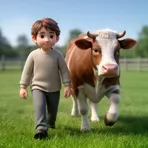
Looking and moving like a cow, slow and calm
Antonyms


Compounds


- Specialized
A study of cow dung that shows what cows eat, their health, and effects on the land
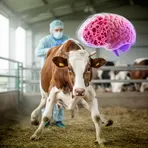
- Specialized
A deadly brain disease in cows that makes them unsteady and restless
How Dull

Surface Forms
Morphology
bovine = bov + ine
This figurative sense is even less inferable because the hidden animal-related root is not recognizable to most learners and the meaning 'stolid or dull' is a metaphorical extension rather than a standard compositional one.
Etymology
Bovine comes from the Latin word bos meaning 'cow'. Because cows often move slowly and look calm, calling someone 'bovine' compares them to a cow and means they are slow, stolid, or dull.