
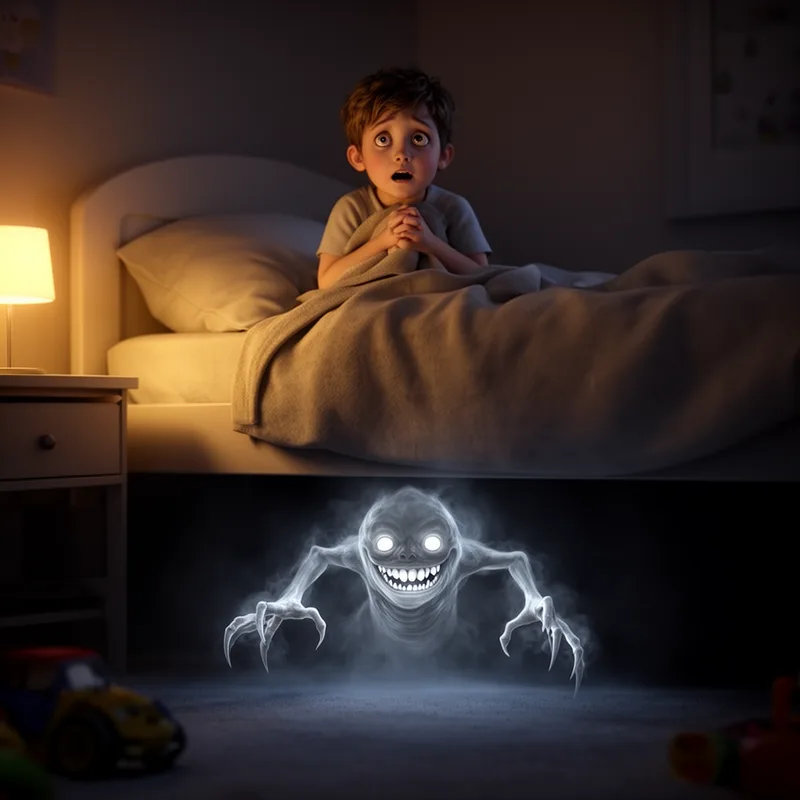
bogy
- noun
- /ˈboʊɡi/
- Archaic
- She told a scary story about a bogy that haunted the old house.
Examples
-
To keep them in line, the parents would warn their kids of the bogy that snatches naughty children.
-
Kill the bogy, not your leader.
-
The children were afraid of the bogy hiding under their beds.
Synonyms

 105
8.3
105
8.3

A small, ugly creature that causes trouble for people
 34
8.1
34
8.1
An imaginary monster adults mention to scare children into behaving
 25
7.4
25
7.4
A made-up creature adults tell children about to scare them when they misbehave
 15
9.9
15
9.9
An imaginary creature parents mention to frighten children
 3
9.9
3
9.9
A scary creature from old stories that scares people

Something people see as a threat that causes fear or worry
How Scary

Surface Forms
Etymology
Bogy meaning an imaginary evil being comes from an old word that meant 'ghost' or 'goblin', and it is the same root you see in the common bogey of 'bogeyman'. That original idea of a frightening creature is why a bogy still means a scary spirit children fear.