
blowdown


 1
5.7
1
5.7
- noun
- /ˈbloʊˌdaʊn/
- US
- Temperatures of materials deposited in the blowdown zone ranged from 100 to 350 degrees Celsius.
- blowdown zone
Examples
-
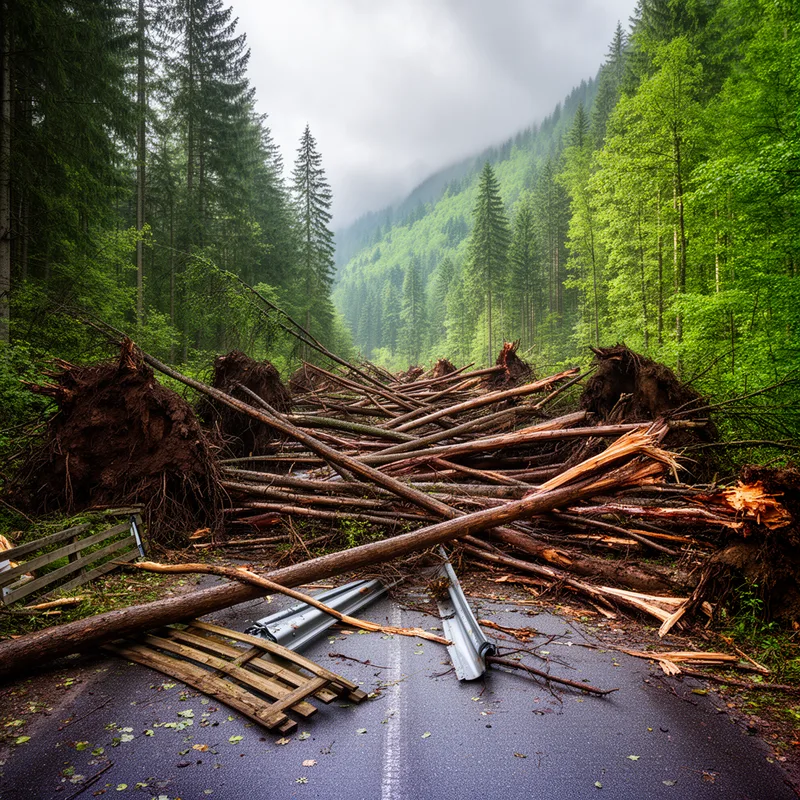
After the storm passed, the landscape was filled with the debris from the blowdown.
-
Certainly, some beautiful forests have been destroyed, and anyone who knew them before the blowdown will feel sadness and loss.
Academic text (2010) -
But we would argue, from our three weeks traveling and working around the blowdowns, that there are in fact very strong consolations....
Academic text (2010) -
Encircling the blowdown zone was the scorch perimeter, where temperatures were hot enough to burn leaves, but winds were not strong enough to down the trees.
Academic text (1997) -
"Savannification is accelerated by widespread drought and windstorms called derechos, which can level miles of trees in blowdowns," says Frelich.
Academic text (2011) -
Anyone who knows the ADK's of the 1960s and 1970s or earlier knows of the big slides on Giant and the other steep-sloped mountains, and the blowdowns on the Dix range.
Blog text (9) -
From 1890 to 1909, Indian agents became concerned that if they did not sell the remaining pine timber on Ojibwe reservations, it would be lost to blowdowns and forest fires.
Academic text (2009) -
The blowdown zone included areas where the eruption force was strong enough to knock over trees, although herbaceous and understory vegetation survived, particularly in sites buried under snow (Franklin et al. 1985, Halpern et al. 1990).
Academic text (1997) -
The strong winds caused a significant blowdown in the forest, toppling multiple trees.
-
Local wildlife habitats were disrupted due to the extensive blowdown that occurred in the region.
How Strong

Surface Forms
Morphology
Etymology
Blowdown is made of blow ('to move by air') and down ('to the ground'). So a blowdown is when strong wind blows things down, leaving fallen trees or debris.