

blinking
- adjective
- /ˈblɪŋkɪŋ/
- Slang
- That was a blinking brilliant performance; I truly enjoyed every moment.
Loading YouTube…
Watch on YouTubeIt makes me very angry at the the lies, you know, blinking lies.
- It makes me very angry at the the lies, you know, blinking lies.
Examples
-
He was blinking furious when he found out that someone had borrowed his car without asking.
-
I can't believe that blinking phone battery died right before the meeting!
-
So this is dark and this would be bright, so this would be the blinking line, I suppose.
-
For her final trick, she's going to put on some blinking Butte silk lashes.
-
I don't want to use waterproof mascara but it's looking like I have to if my little blinkity blinking is here to stay.
Synonyms

 ∞
9.9
∞
9.9

A rude strong word people use to show anger or surprise
 638
7.5
638
7.5
To add strong feeling before a describing word in informal British English, often to show anger

An informal word people put before a descriptive word to show strong feeling, often anger or surprise
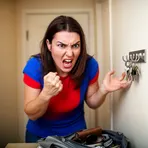
People say it to show strong anger or annoyance

To show strong anger or annoyance before a word

Very bad or annoying
Compounds

How Strong

Surface Forms
Etymology
Blinking as an adjective grew as a polite substitute for stronger swear words, especially in British English, so think of it as a mild way to say 'very' or show annoyance, which explains its use to add emphasis.