
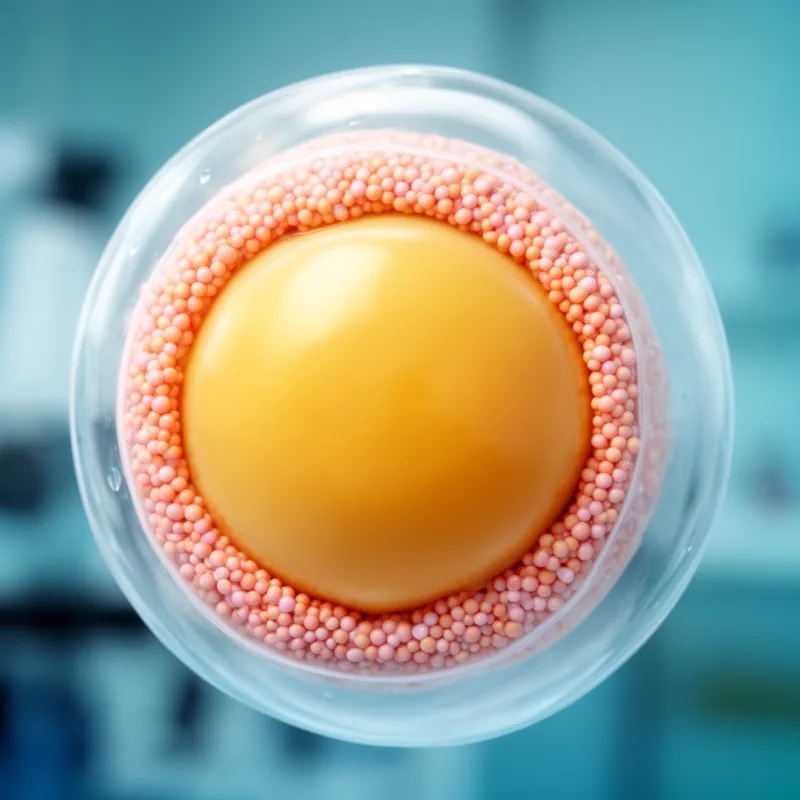
blastoderm
- noun
- /ˈblæstəˌdɜrm/
- Specialized
- The blastoderm is crucial for embryonic development.
Examples
-
During the early stages, the blastoderm forms a protective layer.
-
The blastoderm is the initial layer of cells that forms inside the blastula during early embryonic development.
-
Researchers observed the development of the blastoderm under the microscope.
-
The blastoderm gives rise to all the tissues of the embryo.
-
Within hours after fertilization, a blastoderm forms around the yolk of the egg.
-
Researchers observed that the cells in the blastoderm rapidly divide to form the embryo.
-
The study focused on how the blastoderm layers differentiate into various tissue types as growth progresses.
Synonyms
A layer of cells inside an embryo that makes early body tissues
Surface Forms
Morphology
blastoderm = blastula (opaque) = blasto + derm
Composed of technical combining forms ('blasto-' and '-derm') whose meanings are specialized biological terms and not transparent to general learners.
Etymology
The word blastoderm comes from Greek parts blasto- meaning 'bud' or 'sprout' and -derm meaning 'skin'. So a blastoderm is like a 'skin' of the very first cells in an embryo, a thin layer that will grow into the body's tissues.

