
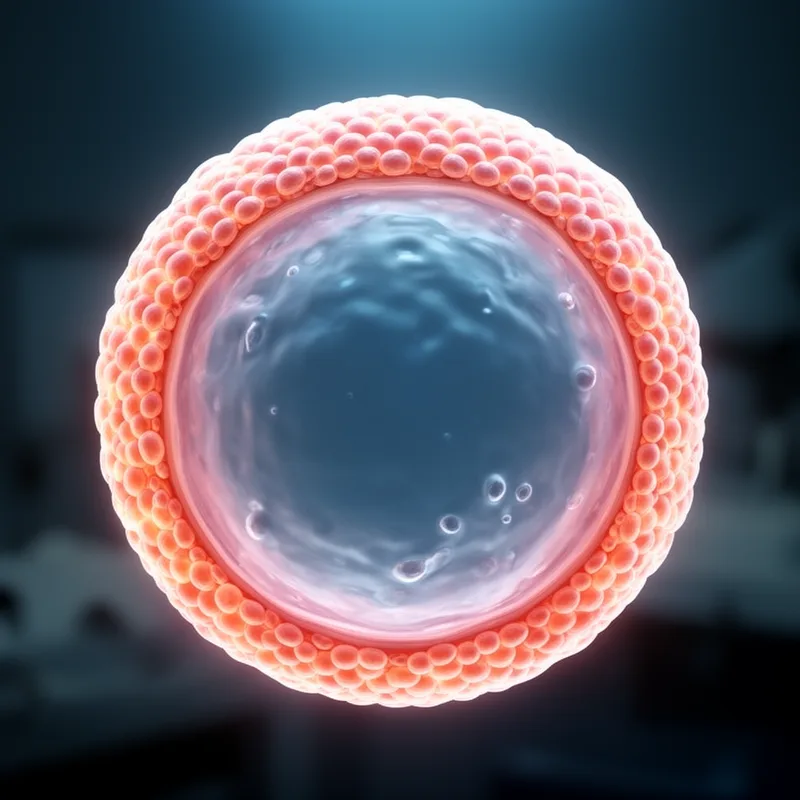
blastocele
- noun
- /blæstəˌsiːl/
- Specialized
- The blastocele enlarges as the blastula develops, allowing more space for cell movement.
Examples
-
Researchers observed that improper formation of the blastocele can lead to abnormal embryonic development.
-
During the early stages, the blastocele fills with fluid.
-
During gastrulation, cells migrate inward through the blastocele to form the three germ layers.
-
The blastocele is crucial for embryonic development.
-
As the blastula matures, the blastocele continues to expand, creating room for the developing embryo.
-
Researchers found that the size of the blastocele plays a significant role in the success of embryonic development.
-
Observing the blastocele is important for understanding early cell differentiation during embryogenesis.
Synonyms
A space filled with liquid inside the hollow ball of cells in an early embryo

A fluid space that forms inside an early embryo when cells divide

A space filled with fluid that forms inside an early embryo
Surface Forms
Morphology
blastocele = blastula (semi-transparent) = blasto + cele
Built from technical combining forms meaning 'blast/embryo' + 'cavity'; the relation is clear to biology learners but the morphemes are specialized and not obvious to general learners.
Etymology
Blastocele breaks into two parts: blasto- meaning 'sprout' or 'young cell' and -cele meaning 'hollow' or 'cavity'. So, a blastocele is the fluid-filled hollow inside a blastula, the early stage of an embryo.

