

bipartite
- adjective
- /ˈbaɪˌpɑrˌtaɪt/
- Specialized
- The surgeon explained that the bipartite anatomy of the organ would require careful examination.
Examples
-
Each plot verifies the assessment of the structure/ornament St-Eustache; by the same token, the bipartite building affirms the validity of the plot, as the descriptive terms that embellish it serve to sustain the historical story in which the building is a passing moment.
Academic text (1998) -
The plant has bipartite leaves that are distinctly divided into two sections.
-
So this is a complete bipartite graph with two equal sized parts.
-
And it's much more reasonable that this is the limit of the sequence of complete bipartite graphs with equal parts.
-
And, of course, twentieth-century architecture is also largely conceived according to this bipartite model.
Academic text (1998) -
The bipartite element atop the head, somewhat too small for a coiffure, recalls the cap of woven and knotted cotton that is worn by important people.
Academic text (1990) -
In my biology class, we studied the bipartite structure of certain flowers that display two separate parts.
Synonyms

 12
6.3
12
6.3

Divided into two parts along a natural line like a chin or the roof of the mouth
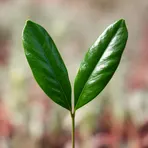

 1
8.2
1
8.2
Split into two separate parts
 1
4.2
1
4.2
Dividing into two or more branches, like a road that splits

Split into two parts or branches, like a river

A part that is split into two, often at the tip, as in a leaf or tongue

Having two rounded parts separated by a deep notch

A leaf or plant part with two separate lobes like a ginkgo leaf

Having two rounded parts that stick out like two small bumps

A leaf or flower with two rounded parts
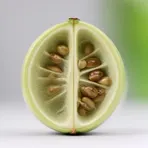
Having two chambers separated by a thin wall

Having two chambers or cells, often in plants and animals

Having two capsules, often in a plant or organ

A limb or body part that has two separate branches

A leaf or petal with edges cut almost to the base making separate parts

Relating to dividing something into two equal parts
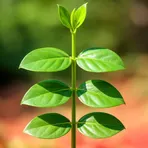
Leaves or parts that grow together in pairs on a stem

Two similar parts joined as a pair, for example two towns
Antonyms

Surface Forms
Morphology
Etymology
Bipartite comes from bi- 'two' and part 'part', so it literally means 'two parts'. A bipartite leaf or body part is split into two main pieces almost down to the base.