
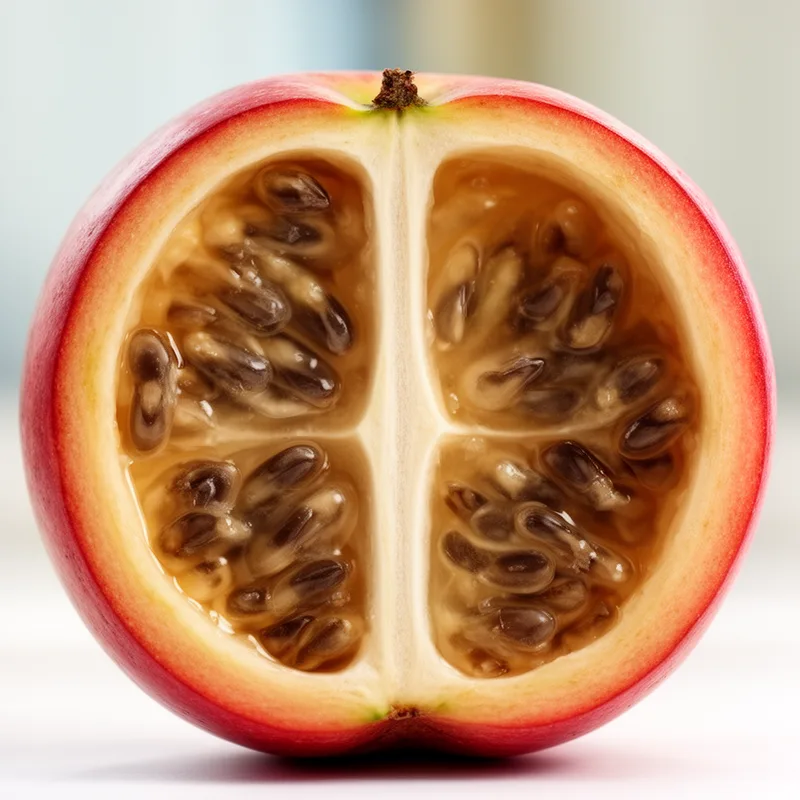
biloculate
- adjective
- /ˌbaɪˈlɒkjʊlɪt/
- Specialized
- The cyst appeared biloculate on the MRI scan, with each chamber separated by a thin wall.
Examples
-
The fruit is biloculate, containing two separate seed chambers.
-
A biloculate capsule was observed during the plant’s dissection.
-
The biloculate structure of the heart is fascinating.
-
In some plants, seeds are biloculate, allowing for efficient growth.
-
The cyst appeared biloculate on the MRI scan, with each chamber separated by a thin wall.
-
A biloculate capsule was observed during the plant’s dissection.
-
The fruit is biloculate, containing two separate seed chambers.
Synonyms

Having two chambers separated by a thin wall

Having two capsules, often in a plant or organ

Having two parts that reach almost to the base
How Many Compartments

Surface Forms
Morphology
biloculate = loculate (semi-transparent) = bi + locule + ate
The prefix 'bi-' clearly indicates 'two', but the base 'loculate' (from 'locule') is a technical biological term not known to most general learners, so the overall relation is only partly transparent.
Etymology
Biloculate comes from bi- meaning 'two' and locule meaning 'small place', like the idea in the word location. So biloculate describes something that has 'two small places' or two chambers, as in seeds or cysts.

