
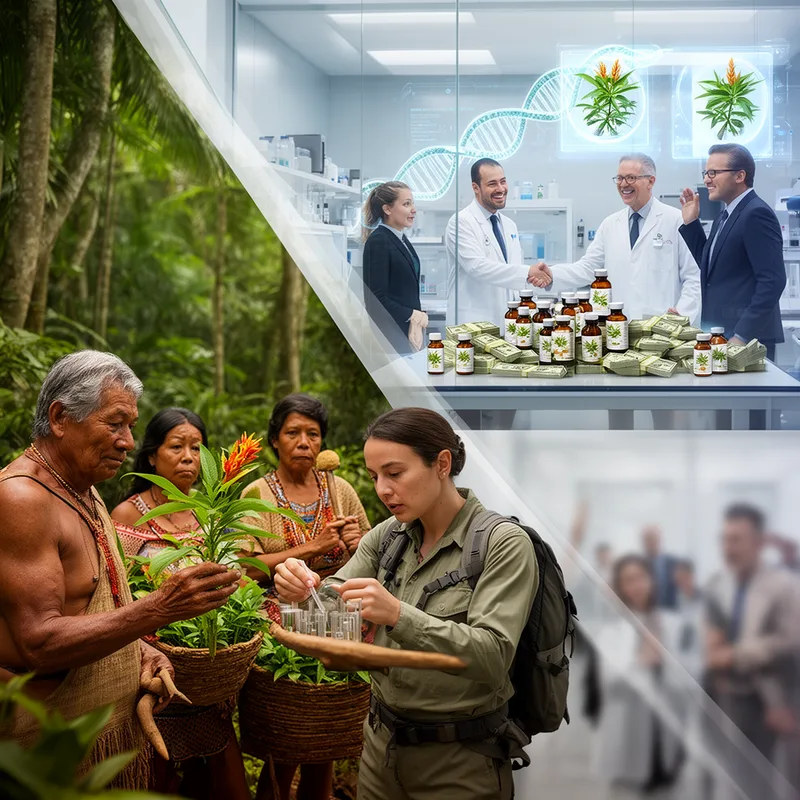
biopiracy


 1
9.9
1
9.9
- noun
- /ˌbaɪoʊˈpaɪrəsi/
- Jargon
- Many indigenous groups are fighting back against biopiracy to reclaim their traditional knowledge and resources.
Examples
-
A recent confrontation involving two developed countries, the United States and Australia, illustrates this type of biopiracy.
Academic text (1997) -
Biopiracy of indigenous peoples has not been limited only to their knowledge of local flora and fauna, however.
Academic text (1997) -
Both types of exploitation are generally referred to as "biopiracy."
Academic text (1997) -
Mitigating the threat of biopiracy, however, is the very process itself of natural product drug development.
Academic text (1997) -
Countries may also be victimized by biopiracy.
Academic text (1997) -
All indigenous peoples have the right to manage their own biological resources, to preserve their traditional knowledge, and to protect these from exportation and biopiracy.
Academic text (2001) -
In this critique, bioprospecting for novel drug plants represented "merely a sophisticated form of biopiracy" (Shiva 2007, 308).
Academic text (2018) -
Monsanto's Bt GMO crops are known to threaten the environment in addition to human health, and India considers Monsanto's unauthorized testing of the crops to be biopiracy.
Blog text (9) -
India has joined the conglomerate of nations directly opposed to the agricultural corruption brought upon by the bloated biotechnology giant Monsanto, declaring legal action against the corporation for a crime dubbed 'biopiracy.'
Blog text (9) -
The issue of biopiracy has gained attention as multinational companies patent indigenous plants without proper consent.
Synonyms
Taking plants and genetic material from local communities without permission or payment
How Exploitative
356
1.1

- Jargon
1
9.9
- Formal
5
8.6
- Specialized
1
8.7
- Specialized
Surface Forms
Morphology
Etymology
The word biopiracy begins with bio-, which means 'life' and is seen in biology, and ends with piracy, from 'pirate' meaning 'to steal'. So biopiracy means taking plants, genes, or traditional knowledge from nature or from local people and using them for profit without fair permission or pay.