
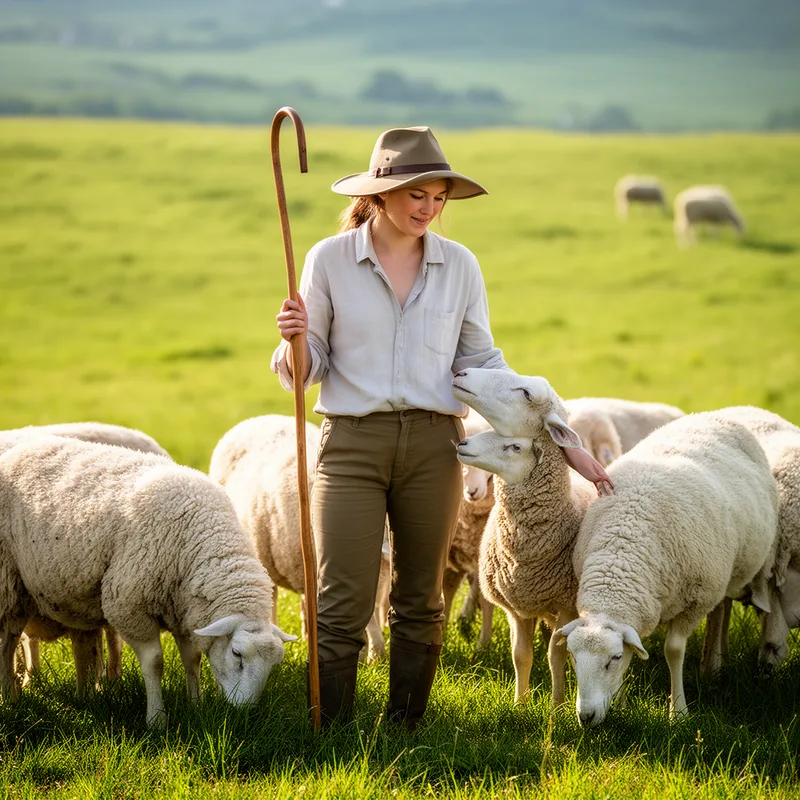
bergère
- noun
- /bɛrˈʒɛr/
- Archaic
- A painted bergère appears in many scenes of eighteenth-century French art.
- Folies-Bergère
Examples
-
The bergère led her flock to the green pastures.
-
In the story, the bergère sang sweetly to the sheep.
-
In the old tale, a young bergère guided her flock through the misty hills.
-
The poet described a gentle bergère resting beneath a willow tree.
-
The bergère watched over her flock as they grazed peacefully on the hillside.
-
As the sun set, the bergère called her sheep back to the safety of the barn.
-
In the story, the bergère sang a beautiful song to soothe her flock at dusk.
Synonyms
 15
3.7
15
3.7

A person who looks after and moves animals like sheep or cattle
 3
5.6
3
5.6
A person who looks after sheep on open land
 3
6.5
3
6.5
A woman who looks after sheep

A woman who looks after sheep in fields

A woman who looks after a group of farm animals like sheep or cattle
Surface Forms
Etymology
Bergère comes from the French word berger, which means 'shepherd', with a feminine ending for a woman. So a bergère is a woman who looks after sheep, in other words a 'shepherdess'.