
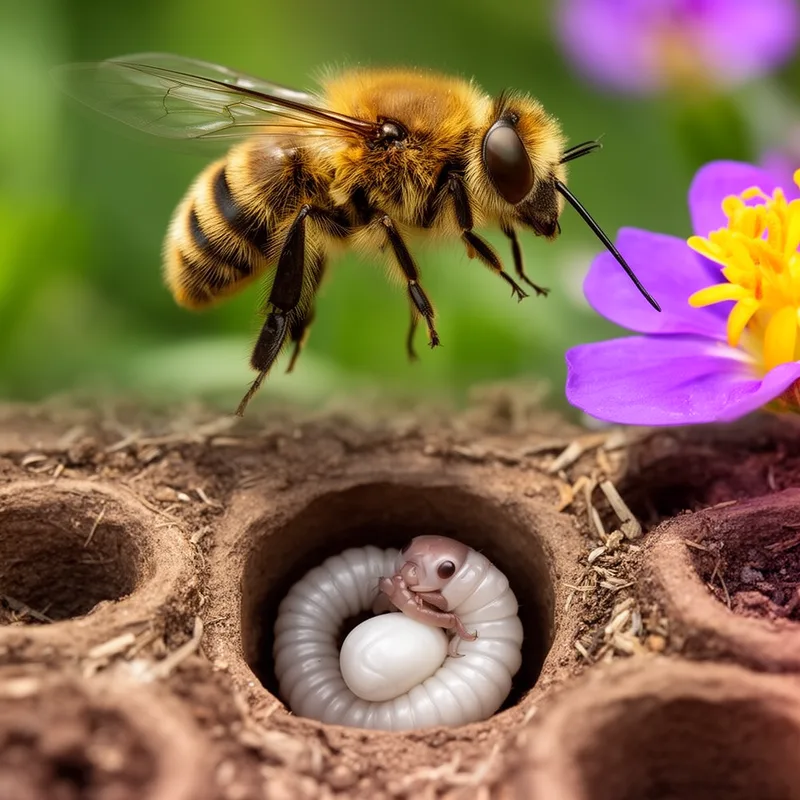
bee fly
- noun
- /biː flaɪ/
- I spotted a bee fly resting on the petal, its fuzzy body blending with the flowers.
Examples
-
The larva of the bee fly is known to parasitize the nests of real bees.
-
Minute, young, predatory larvae of bee flies and robber flies slip through the silica, searching for grubs and clutches of grasshopper eggs.
Academic text (1993) -
The bee fly hovered near the blossoms, eagerly sipping nectar.
Synonyms

A hairy fly that looks like a bee and visits flowers
Surface Forms
Morphology
The compound is a straightforward modifier + head construction (bee + fly) indicating a type of fly associated with or resembling a bee, so a B1 learner who knows both words can infer it is a fly that looks like or is related to bees. This follows a common cross-linguistic noun-compounding pattern, so the basic meaning is compositional and transparent even if specialized biological details (e.g., parasitic larvae) may require extra knowledge.
Etymology
Bee fly names a kind of insect that looks like a fuzzy bee but is really a fly. Many of these flies sip nectar like bees and their young live in bee nests, so the name links the animal's bee-like look and life with bees and today means 'a fly that looks like and is connected to bees'.

