
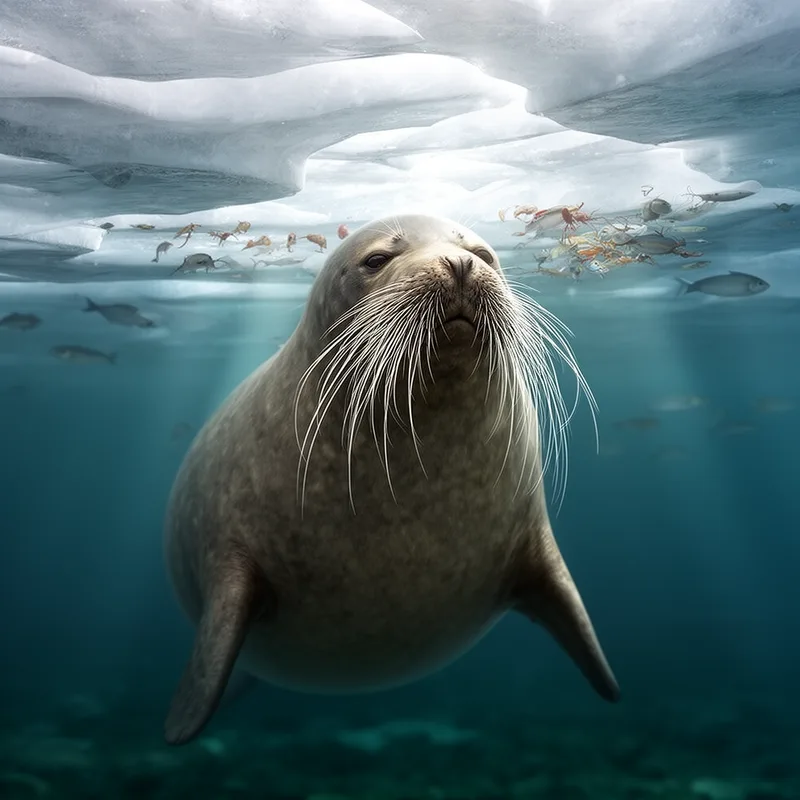
bearded seal


 1
6.8
1
6.8
- noun
- /ˈbɪrdɪd siːl/
- US
- Pinniped sightings included 46 bearded seals, 32 ringed seals, 559 walruses, and 3 unidentified pinnipeds.
Examples
-
And yet polar bears, ringed seals, and bearded seals survived as species.
Blog text (9) -
Walrus, bearded seal, ringed seal, narwhal, beluga and caribou, and fish.
-
Bearded seals predominated in the west (74%) and spotted seals in the east (69%); ribbon seals made up about 12% overall and ringed seals about 4%.
Academic text (1997) -
Polar bears primarily hunt for bearded seals in the Arctic waters during the winter.
-
The bearded seal can often be seen lounging on the ice in the Arctic Ocean.
-
Scientists study the bearded seal to understand its role in the Arctic ecosystem.
Synonyms
 108
1.0
108
1.0
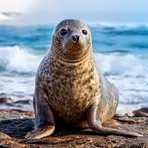
A large sea mammal with flippers that lives near cold coasts

A bearded seal from Arctic waters with thick whiskers on its face

A medium-sized Arctic seal with whiskers on each side of its nose, also called the bearded seal
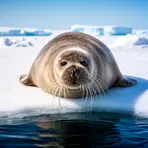
A large Arctic seal with thick whiskers that lives on sea ice
Surface Forms
Morphology
This is a straightforward adjective + noun compound where the meaning (a seal that is bearded or has prominent whiskers) is directly and compositionally derived from 'bearded' and 'seal'. Such descriptive compounds are cross-linguistically common and would be understandable to a B1 learner who knows both constituent words.
Etymology
The noun bearded seal comes from the long whiskers on each side of the animal's face that look like a beard, so people called it a bearded seal. That's why the name now means this seal that lives in the Arctic.