
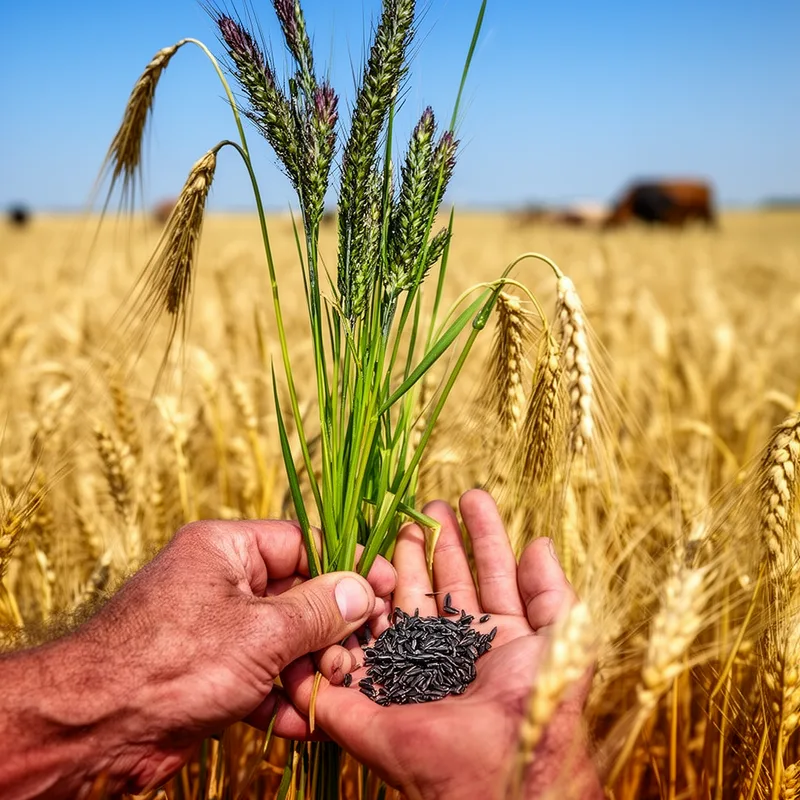
bearded darnel
- noun
- Specialized
- Historically, the presence of bearded darnel in bread flour was believed to cause dizziness and nausea.
Examples
-
The seeds of bearded darnel can be toxic to livestock if ingested in large quantities.
-
Farmers often struggle with bearded darnel in their fields.
-
Farmers take care to remove bearded darnel from their wheat fields to protect the crop.
-
The bearded darnel can contaminate grain crops.
-
Farmers must be careful to remove the bearded darnel from their fields as its seeds can be toxic.
-
The bearded darnel grows among the wheat, making it difficult for harvesters to differentiate between the two.
-
After the rain, the bearded darnel spread quickly in the grainfields, often overshadowing the crops.
Synonyms
A wild grass that grows in wheat fields and has seeds that can be poisonous

A weed grass that grows in grain fields and sometimes has poisonous seeds
Surface Forms
Morphology
The noun phrase is a straightforward adjective + noun composition: 'bearded' describes a plant having stiff awns and 'darnel' names a weedy grass, so the combined phrase denotes a darnel with a beard (awned seeds). This follows regular English botanical naming patterns and is directly inferable by a learner who knows both constituent meanings.
Etymology
Bearded darnel comes from the plant's look: bearded refers to the long hairs on its seed heads, and darnel is an old name for a grain weed whose seeds were thought to make people 'dizzy' or 'sick', so the name reminds us it is a harmful grass with sometimes poisonous seeds.

