
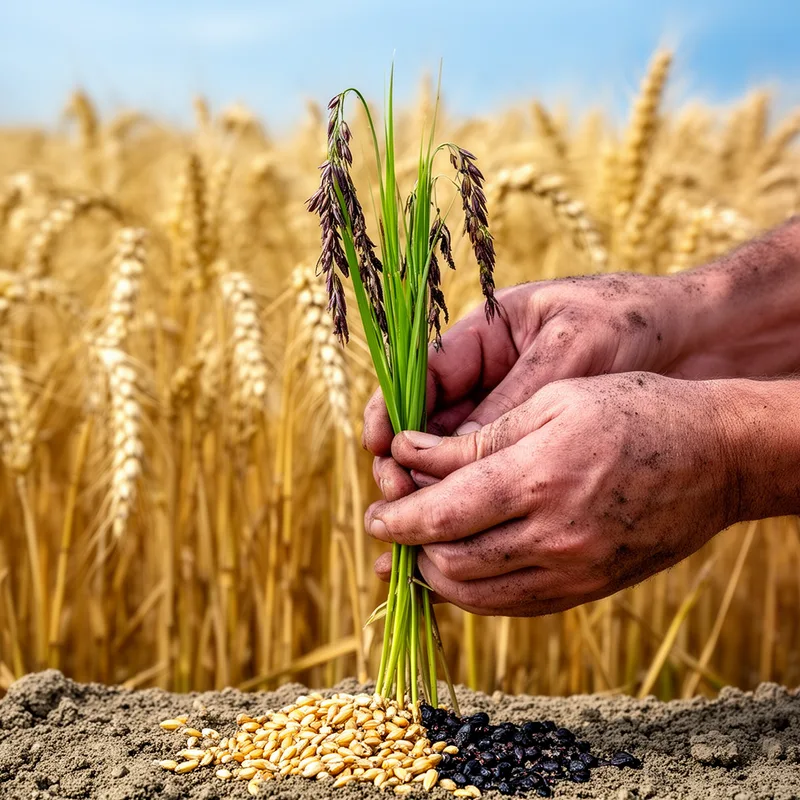
Lolium temulentum
- noun
- Specialized
- Farmers must carefully remove Lolium temulentum from their wheat fields to avoid contaminated crops.
Examples
-
Farmers often struggle with Lolium temulentum in their fields.
-
Researchers studied the ecological impact of Lolium temulentum in cultivated farmland.
-
The seeds of Lolium temulentum have historically caused health problems when mixed with grain.
-
Did you know that Lolium temulentum can be toxic?
-
The species Lolium temulentum is often found in grainfields, where it competes with crops for resources.
-
Farmers must control the growth of Lolium temulentum to prevent it from damaging their harvest.
-
The seeds of Lolium temulentum can be toxic and pose a risk to livestock if ingested.
Synonyms
A wild grass that grows in wheat fields and has seeds that can be poisonous

A wild grass that grows in grain fields and has seeds that can be poisonous
Surface Forms
Morphology
Lolium + temulentum
This is a Latin binomial species name rather than a compositional English phrase: 'Lolium' is a genus label and 'temulentum' is not a recognized English word (dictionary entry missing), so the label functions as a proper name rather than a meaningful phrase. A B1 learner who knows the constituent items in English would not be able to infer the specific sense 'weedy annual grass with sometimes poisonous seeds' from these parts, so the expression is not transparently derivable.
Etymology
Lolium temulentum got its name from an old idea that its seeds made people feel 'drunk'. Farmers found this wild grass mixed with their grain, and bread made from that grain could make people dizzy or sick, so the plant became known for its 'poisonous' seeds.

