
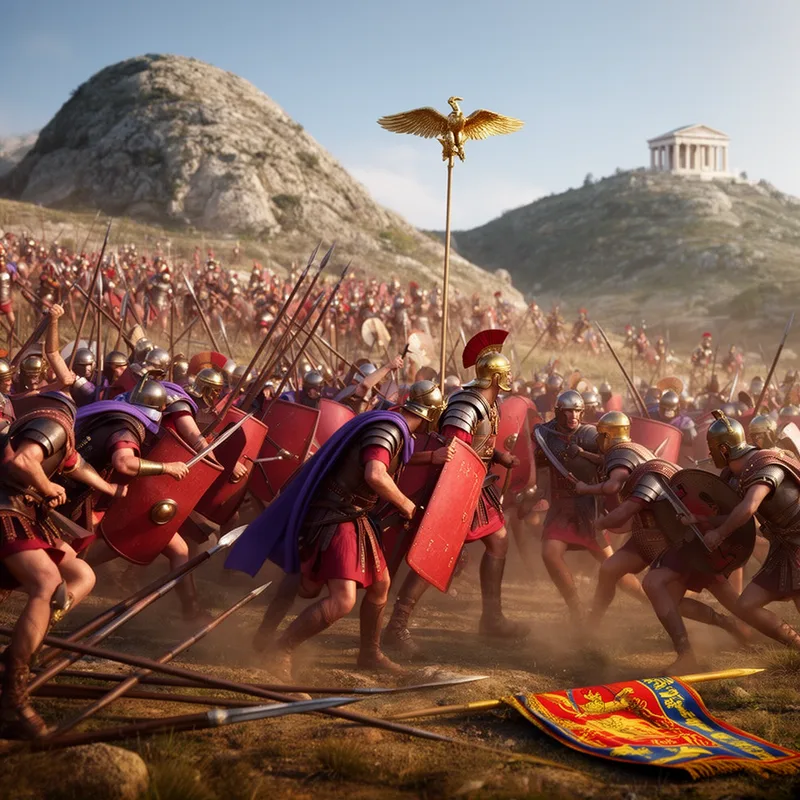
battle of Cynoscephalae
- proper noun
- During the battle of Cynoscephalae, Roman tactics overcame the traditional phalanx formation of the Macedonians.
Examples
-
The aftermath of the battle of Cynoscephalae significantly weakened Macedonian influence in Greece.
-
Historians often discuss the battle of Cynoscephalae as a turning point in Roman expansion.
-
The battle of Cynoscephalae marked a turning point in Roman history.
-
Did you know about the battle of Cynoscephalae?
-
During the battle of Cynoscephalae, Roman tactics overcame the traditional phalanx formation of the Macedonians.
-
Historians often discuss the battle of Cynoscephalae as a turning point in Roman expansion.
-
The aftermath of the battle of Cynoscephalae significantly weakened Macedonian influence in Greece.
Synonyms



 1
9.9
A place in Thessaly, Greece where Romans fought Macedonians in 197 BC
Surface Forms
Morphology
battle + of + Cynoscephalae
This is a fully compositional place-name construction: 'battle' + 'of' + a place name denotes the battle that took place at Cynoscephalae. A B1 learner who knows 'battle' and recognises 'Cynoscephalae' as a location can infer it refers to the battle fought there (even if they cannot infer the date or its decisiveness). The 'battle of X' genitive/locative pattern is cross-linguistically common, so the basic meaning is transparent.
Etymology
Battle of Cynoscephalae was fought on two hilltops that people said looked like 'dog heads', which is how the place got its name. In 197 BC the Romans beat Philip V there and the victory ended Macedonian control in Greece, so the name now refers to that decisive battle.