

bass viol
- noun
- /bæs ˈvaɪəl/
- Archaic
- Early Baroque composers often wrote music specifically for the bass viol due to its rich, resonant sound.
Examples
-
The museum displayed a beautifully crafted 18th-century bass viol among its collection of stringed instruments.
-
He played the bass viol in the orchestra, providing the deep foundation for the ensemble.
-
The bass viol has a rich, deep sound.
-
Many orchestras include the bass viol in their performances.
-
He played the bass viol in the orchestra, providing the deep foundation for the ensemble.
-
Early Baroque composers often wrote music specifically for the bass viol due to its rich, resonant sound.
-
The museum displayed a beautifully crafted 18th-century bass viol among its collection of stringed instruments.
Synonyms

A low string instrument that you play with a bow, like a cello, used in Renaissance and Baroque music
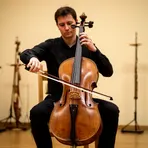
A low pitched string instrument that you play with a bow like a cello
How Low


Surface Forms
Morphology
The meaning 'a large, low-pitched string instrument' is directly and compositionally derived from 'bass' (low-pitched, providing the register) combined with 'viol' (a bowed string instrument family). This noun–noun compounding follows regular, cross-linguistic instrument-naming patterns, so a B1 learner who knows both constituents would readily infer the MWE's meaning.
Etymology
Bass viol comes from two simple words: bass means 'low' and viol is the name of a group of string instruments often held between the player's legs. So the name meant the low instrument in that group, which is why a bass viol is a large, low-pitched string instrument today.