
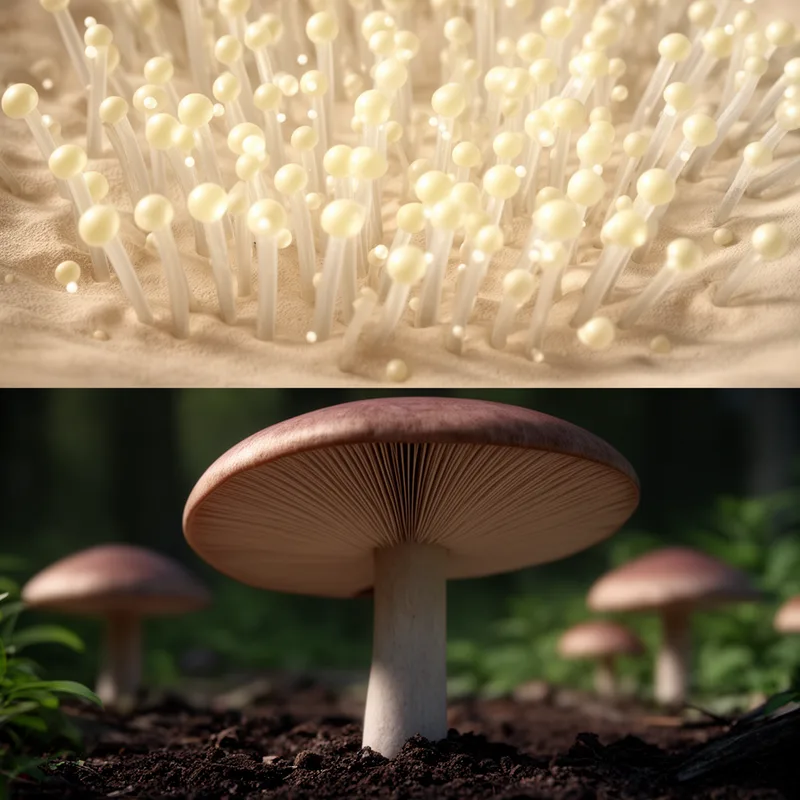
basidiosporous
- adjective
- /bəˌsɪdiəˈspɔrəs/
- Specialized
- Many mushrooms are classified as basidiosporous fungi due to the way they produce their spores.
Examples
-
The basidiosporous fungi play a crucial role in decomposition.
-
Some plant diseases are caused by basidiosporous fungi that infect crops.
-
The basidiosporous nature of certain molds makes them important for soil ecology.
-
Are all mushrooms basidiosporous in nature?
-
Many mushrooms are classified as basidiosporous fungi due to their unique spore production method.
-
Certain plant diseases arise from basidiosporous fungi that infect agricultural crops.
-
The basidiosporous characteristics of some fungi are vital for maintaining soil health.
Synonyms


 1
7.2
1
7.2
Having parts that make tiny cells to reproduce instead of seeds

Relating to cells that make spores in fungi like mushrooms
Relating to fungi like mushrooms and toadstools that make spores

Producing spores that plants or fungi use to reproduce
Surface Forms
Morphology
basidiosporous = basidiospore (semi-transparent) = basidio + spore + ous
Formed by adding the adjective suffix '-ous' to 'basidiospore'; 'spore' is clear but 'basidio-' is a specialized mycological combining form, so the construction is partly technical.
Etymology
Basidiosporous comes from the parts basidio- meaning 'base' or 'little stand' and spore meaning 'seed' or 'tiny cell'. So the word describes fungi that produce their spores on a small 'base' called a basidium.