
basidiomycete
- noun
- /bəˌsɪdiəˈmaɪsiːt/
- Specialized
- Many culinary dishes use the basidiomycete known as the shiitake mushroom for its rich flavor.
Examples
-
Researchers studied a rare basidiomycete that thrives in decaying wood, contributing to nutrient cycling.
-
The other Basidiomycete was Amylostereum areolatum, the pathogen associated with Sirex noctilio, a nonindigenous wood wasp.
Academic text (2010) -
There are several records of this lichenicolous basidiomycete from Maine, as well as Matane, QC, Canada, in the NYBG (2017) database collected by William Buck or Richard Harris on Platismatia glauca.
Academic text (2017) -
The basidiomycete fungi produce unique mushrooms that can be found in various forests.
Synonyms

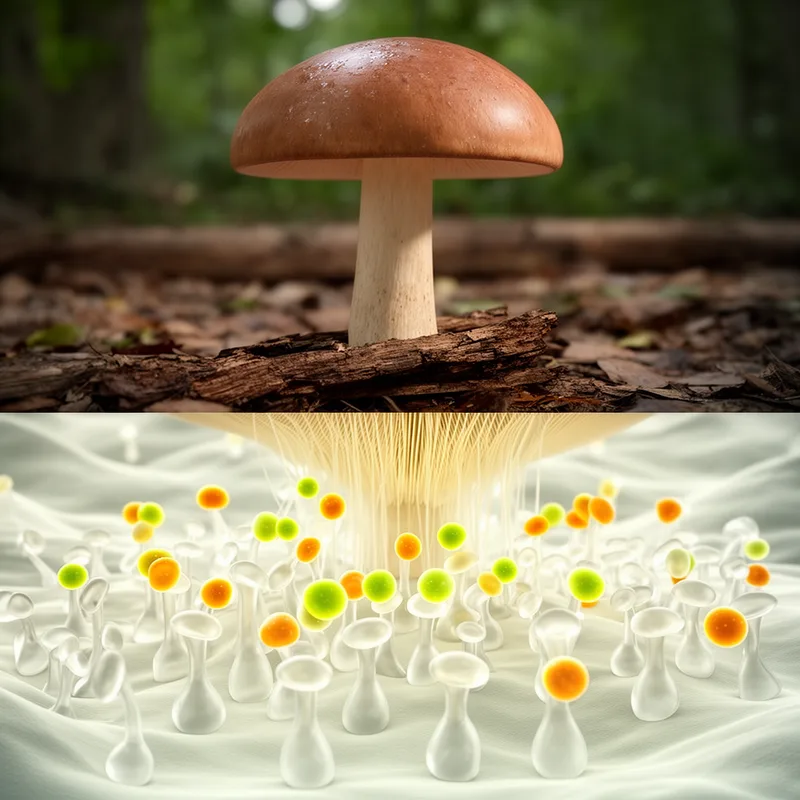
A living thing like mushrooms that makes spores on small club-shaped cells

A group of fungi that includes mushrooms, puffballs, and shelf fungi
Surface Forms
Morphology
basidiomycete = basidio + mycete
The term is a specialized scientific term with roots not commonly recognized by English learners.
Etymology
Basidiomycete comes from the parts basidium, meaning 'little base', and mycete, meaning 'fungus'. A basidium is like a tiny base or stalk that holds 'spores', so basidiomycetes are fungi like mushrooms that carry their spores on small 'bases', which is why many mushrooms are in this group.

