
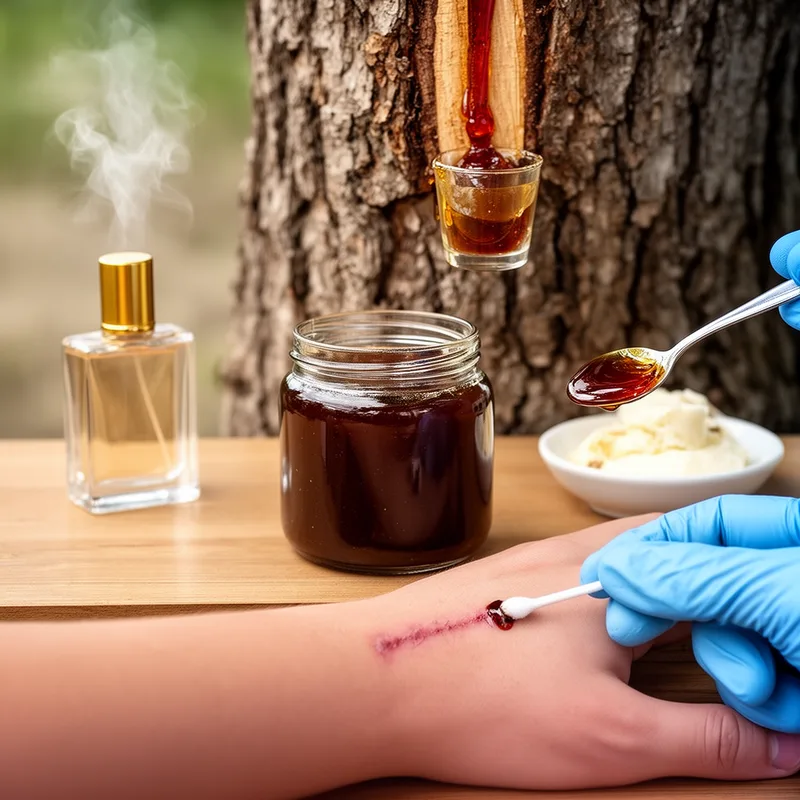
balsam of Peru
- noun
- /ˈbɔːlsəm əv pəˈruː/
- Specialized
- The perfumer chose balsam of Peru for its sweet and vanilla-like scent.
Examples
-
The doctor applied balsam of Peru to the wound to promote healing.
-
Some people may develop an allergy to balsam of Peru in skin-care products.
-
The balsam of Peru is often used in high-end perfumes.
-
Many people enjoy the scent of balsam of Peru in their cosmetics.
-
The doctor applied balsam of Peru to the wound to promote healing.
-
Some people may develop an allergy to balsam of Peru in skin-care products.
-
The perfumer chose balsam of Peru for its sweet and vanilla-like scent.
Synonyms

 9
4.9
9
4.9

A sticky plant substance with a sweet smell used to soothe or perfume
 2
7.7
2
7.7
A sticky fragrant gum from some trees used for medicine and perfumes
A yellow-brown sticky substance from a South American tree used in cough syrup and perfume
A sticky tree resin that people use in cough medicine and perfume

A sticky yellowish-brown resin from a South American tree used in cough syrups and perfumes

A sticky tree resin used to protect skin and scent perfumes
A fragrant sticky substance from trees that grow in Sumatra used in perfumes and medicine

A thick fragrant sap from Copaifera trees used in varnishes, perfumes, and ointments

A thick sticky oil from the Copaifera tree used in ointments and varnishes
Surface Forms
Morphology
The phrase names a kind of balsam that comes from Peru, so its meaning is directly compositional from 'balsam' (an aromatic resin) + 'of' + 'Peru' (the country). This simple origin-based noun phrase is cross-linguistically transparent, so a B1 learner who knows the constituent words can infer the basic referent and likely use.
Etymology
Balsam of Peru comes from a sticky, sweet-smelling resin people collected from a tree and used as a balsam, a soothing 'balm', and because it was sold from the Americas it became known with the name Peru. Because it smelled nice and helped heal, balsam of Peru came to be used in 'perfume', 'flavoring', and 'medicine'.