

balaclava helmet
- noun
- /ˌbæl.əˈklɑː.və ˈhɛlmɪt/
- Skiers often use a balaclava helmet for protection against wind and cold temperatures.
Examples
-
During the winter hike, Tom wore a balaclava helmet to keep his head and neck warm.
-
The soldier pulled down his balaclava helmet before stepping out into the snow.
-
He wore a balaclava helmet during the winter hike.
-
The balaclava helmets kept us warm in the freezing temperatures.
-
During the winter hike, Tom wore a balaclava helmet to keep his head and neck warm.
-
Skiers often use a balaclava helmet for protection against wind and cold temperatures.
-
The soldier pulled down his balaclava helmet before stepping out into the snow.
Synonyms
 8
3.7
8
3.7

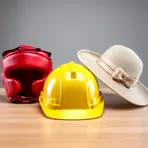
Items like hats worn on the head for protection, decoration, or ceremony
 4
7.7
4
7.7
A close-fitting cap that covers the head, neck and most of the face, leaving the eyes open
 3
3.1
3
3.1
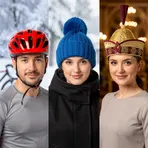
Items you wear on your head, like hats or helmets
 2
2.2
2
2.2
Cloth or hat that people wear on the head, sometimes over the face
 1
5.8
1
5.8
A strong covering worn on the head to protect it

A cloth worn on the head for cultural, religious, or protective reasons
How Covered

Surface Forms
Morphology
Both constituents denote types of head coverings: 'balaclava' (a close-fitting cap covering head and neck) and 'helmet' (a protective head covering). The compound is a straightforward compositional label for a head-covering combining those properties, so a B1 learner who knows both words can infer the meaning without prior exposure.
Etymology
Balaclava helmet may come from the town of Balaclava, where soldiers in very cold weather wore knitted head coverings called balaclavas that wrapped the head like a helmet. That's why today the term means a close cap that covers the head and neck to 'keep warm' and often leaves only the eyes or mouth showing.