
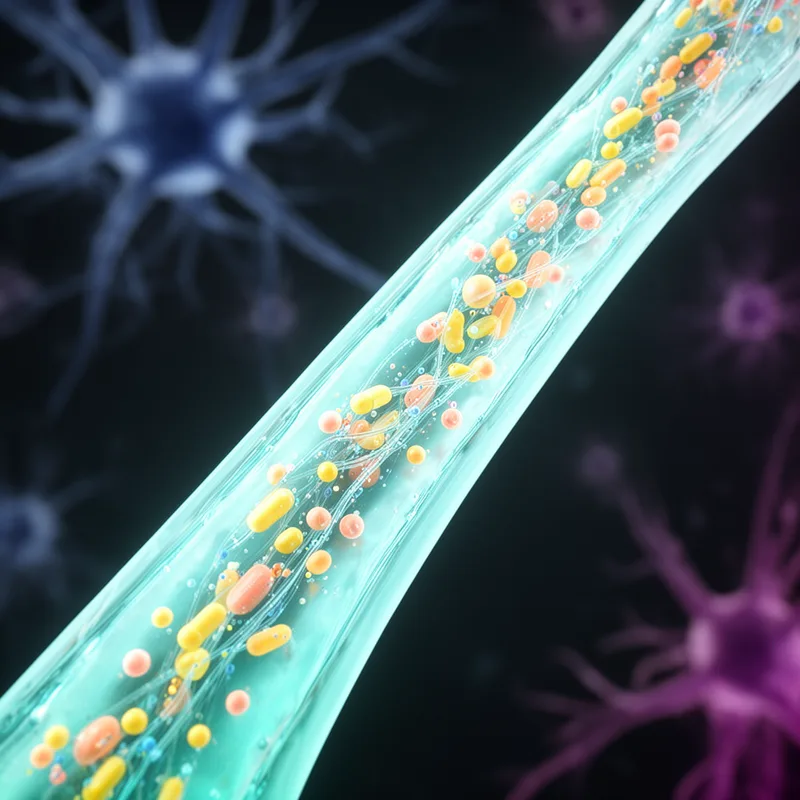
axoplasm


 1
9.9
- noun
- /ˈæksəˌplæzəm/
- Specialized
- Researchers studied the movement of proteins within the axoplasm to understand nerve function.
Examples
-
The axoplasm carries nutrients and signals along the nerve fiber.
-
Damage to the axoplasm can disrupt communication between nerve cells.
-
The axoplasm contains essential nutrients for nerve function.
-
Scientists study the axoplasm to understand nerve cell behavior.
-
Researchers discovered that the axoplasm in healthy nerve cells plays a crucial role in transporting nutrients along the axon.
-
During the experiment, the flow of axoplasm was monitored to understand how materials move within the nerve fibers.
-
The axoplasm contains various organelles that are essential for maintaining the health of the nerve cell.
Surface Forms
Morphology
Etymology
Axoplasm comes from axon meaning 'axis' or 'shaft' like an axle and plasm meaning 'formed substance', the same root you see in plasma. So, axoplasm is the 'substance inside the axon' that carries materials along a nerve fiber.