
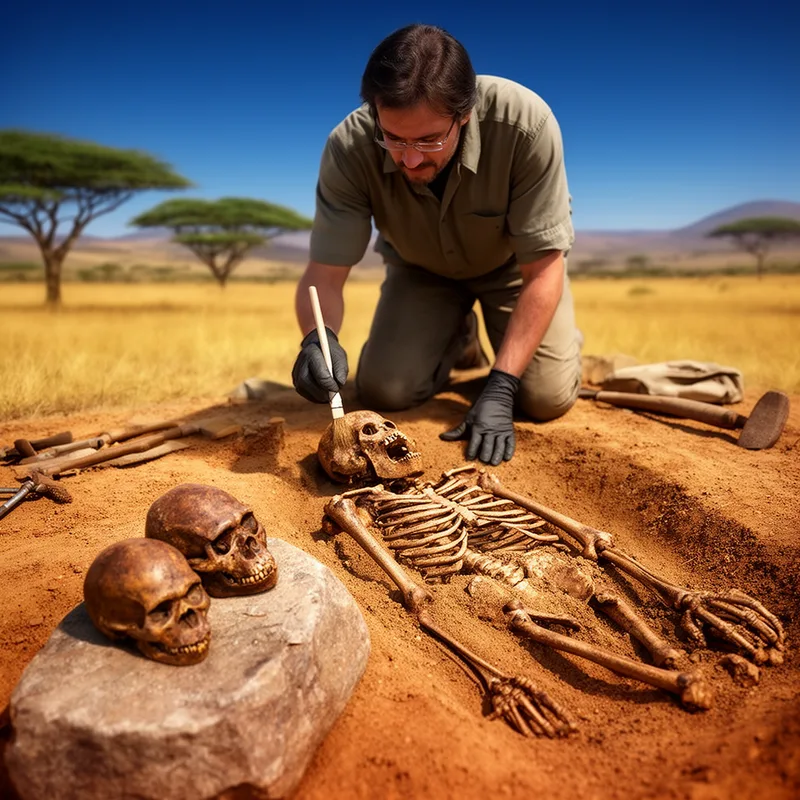
australopithecine
- adjective
- /ˌɔːstrəloʊˈpɪθiˌsiːn/
- Specialized
- Scientists have studied australopithecine bones to learn more about early human evolution.
Examples
-
The australopithecine fossils were discovered in South Africa.
-
The australopithecine fossils were discovered in South Africa in the early twentieth century.
-
This site yielded several australopithecine skulls, helping to clarify our ancestral tree.
-
Is the australopithecine the ancestor of modern humans?
-
The fossil evidence includes several australopithecine remains, shedding light on early human evolution.
-
Researchers have discovered australopithecine tools that suggest advanced behavior for their time.
-
The study focused on the australopithecine traits that distinguish them from modern humans.
Surface Forms
Morphology
australopithecine = Australopithecus (semi-transparent) = australopithecus + ine
Formed regularly from the genus name + the adjectival/member-forming suffix '-ine', but the base is a technical scientific name unfamiliar to typical B1 learners.
Etymology
Australopithecine comes from the name Australopithecus, which is made of austral- meaning 'southern' (the same 'austral' as in Australia) and -pithecus meaning 'ape'. So calling something australopithecine links it to a 'southern ape', explaining why the word describes early ape-like hominids from Africa.

