

austenitic steel
- noun
- /ˌɔːstɪˈnɪtɪk stiːl/
- Specialized
- Stainless cookware is often made from austenitic steel because of its resistance to rust and corrosion.
Examples
-
Medical instruments are typically manufactured using austenitic steel for hygiene and strength.
-
The welders specified austenitic steel due to its durability in high-temperature environments.
-
The construction used austenitic steel for its durability.
-
Many manufacturers prefer austenitic steels for their products.
-
Medical instruments are typically manufactured using austenitic steel for hygiene and strength.
-
Stainless cookware is often made from austenitic steel because of its resistance to rust and corrosion.
-
The welders specified austenitic steel due to its durability in high-temperature environments.
Synonyms

 40
2.8
40
2.8

A metal that does not rust or stain

A strong steel alloy with chromium and nickel that resists rust and stays flexible at different temperatures
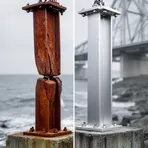
Metal made by adding nickel to steel so it resists rust and is very strong
Surface Forms
Morphology
The noun phrase is fully compositional: the adjective 'austenitic' (having an austenite microstructure) simply modifies 'steel', so a learner who knows both constituents can infer it means 'steel that has an austenitic structure' and thus its typical properties. This adjectival modification pattern is a standard, predictable composition found across languages, making the meaning directly derivable from the parts.
Etymology
Austenitic steel is named after a scientist who studied metals, Sir W.C. Roberts-Austen. He used the name austenite for a metal form he found, so steels that keep that form were called austenitic. So today austenitic steel means the kind of steel that stays 'non-magnetic' and is 'resistant to rust'.