
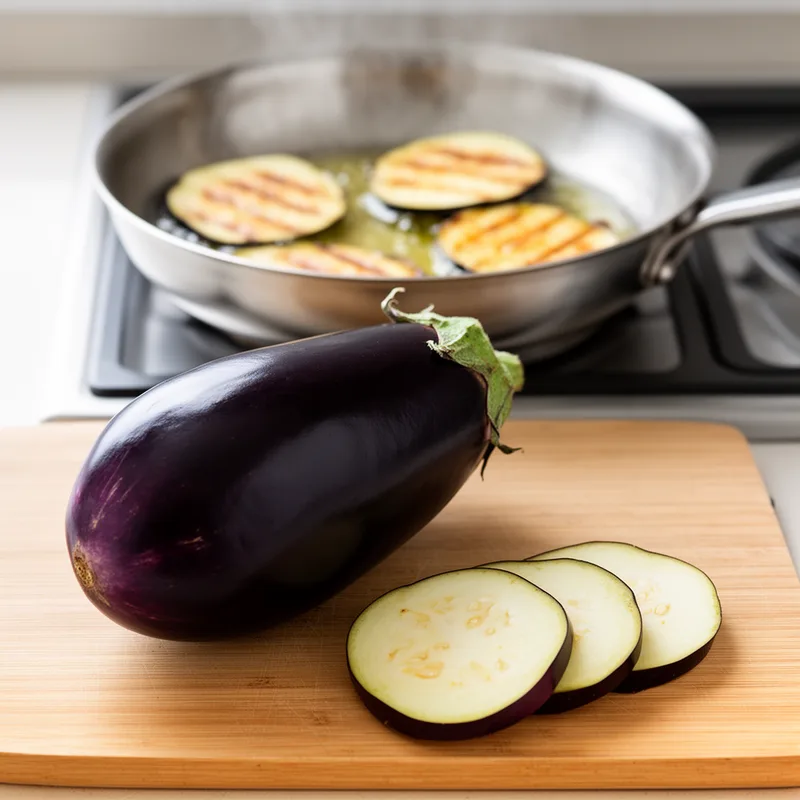
aubergine
 3
5.1
3
5.1

- noun
- /ˈoʊbərˌdʒin/
- UK
- The meat was fork-tender, and the aubergine provided an earthy highlight to the dish.
- purple aubergine
Loading YouTube…
Watch on YouTubeWe have Black beauty eggplant, we have long purple eggplant and we have little fingers eggplant.
- We have Black beauty eggplant, we have long purple eggplant and we have little fingers eggplant.
- But I grew tomatoes and Peppers, eggplant, snapdragons, straw flowers, sweet peas.
- And those are eggplant, tomatoes, Peppers, potatoes.
- For instance, in the nightshade family, potatoes, eggplant, Peppers, tomatoes and goji berries.
- Nightshades is a, is a kind of plant and it includes potatoes, tomatoes, eggplant, Peppers, tomatillos.
- Spinach, eggplant, tomatoes, and it breaks my heart to say this, but avocados because I love avocados.
- Honestly, I can't tell what is the eggplant and what is the meat success?
- It's also funny, I guess aubergines funny, I don't know.
Examples
-
Salmon, brown rice, baked aubergine and something else I can't remember.
-
Bark, would you call this color grape or aubergine?
-
But now I want that aubergine Frenchie.
-
So I get this really deep, sort of plummy aubergine sort of color.
-
This top is supposed to be neon aubergine, but it's all wrong!
-
When I did glow up in the UK, they told me aubergine is eggplant.
-
I suppose, we won't be eating your aubergines this summer.
-
We have Black beauty eggplant, we have long purple eggplant and we have little fingers eggplant.
-
The main course was the most succulent and aromatic tagine of lamb with aubergine and an almond couscous.
Blog text (19) -
For dinner, I grilled aubergine slices and served them with a tangy sauce.
Synonyms
 54
1.0
54
1.0
A purple vegetable with shiny skin that you can eat


 1
8.4
1
8.4
A purple vegetable like an eggplant that you cook and eat
A large purple vegetable with shiny skin that you cook and eat

A small round eggplant that people eat as a vegetable in West Africa
How Dark

Surface Forms
Etymology
The word aubergine comes from Arabic al-badinjan through French, with the name taken from Persian and Indian words for the plant. That's why the British aubergine and the American 'eggplant' are the same thing — early types were often small and white, like an 'egg', which explains the American name.