

atopognosis
- noun
- /ˌætəˌpoʊɡˈnoʊsɪs/
- Specialized
- Patients with atopognosis may not be able to indicate where they have been touched on their skin.
Examples
-
The neurologist tested for atopognosis by lightly tapping different parts of the patient's arm.
-
The patient suffers from atopognosis after the stroke.
-
Loss of sensation and atopognosis can indicate damage to the parietal lobe.
-
Doctors diagnosed her with atopognosis during the examination.
-
The neurologist tested for atopognosis to assess the patient's ability to feel touch in specific areas of their body.
-
Patients with atopognosis often struggle to pinpoint where on their skin they are being touched due to nerve damage.
-
During the neurological exam, the doctor assessed for atopognosis by asking the patient to identify locations of touch stimuli.
Synonyms
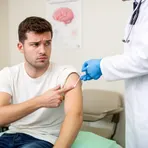
A person who cannot tell where on their body they are touched
Antonyms



Surface Forms
Morphology
atopognosis = topognosis (opaque) = a + topo + gnosis
Although analyzable as a- (negation) + topognosis, the components are technical Greek combining forms and the meaning is not inferable to an average B1 learner.
Etymology
Atopognosis comes from Greek parts a- meaning 'without', topo- meaning 'place', and -gnosis meaning 'knowledge', and you can see topo- in topography (maps of places) and -gnosis in diagnosis (knowing). So, atopognosis means 'without knowledge of place', which explains why it is the inability to tell where on the body someone has been touched.