

atony
- noun
- /ˈeɪtəni/
- Specialized
- Thus, our patient has facial expression and use of neck, shoulders, and elbows, but he suffers muscular atony and atrophy of both the hands and the lower extremities.
Examples
-
The doctor explained that the patient experienced atony in the muscles of his legs, making it difficult for him to walk.
-
An upper motor neuron disorder, such as a spine or brain injury, does not generally manifest as muscular atony or this degree of atrophy.
Academic text (1995) -
After the surgery, the nurse monitored the patient for signs of atony, as it could lead to complications in recovery.
-
Due to prolonged inactivity, she developed atony in her arm muscles, requiring physical therapy to regain strength.
Synonyms



 1
9.9
1
9.9
A lack of normal muscle tightness so muscles feel weak and loose
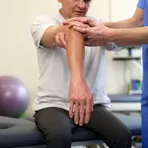
Lack of normal muscle tone that makes muscles weak and floppy

A condition of low muscle tension causing muscles to feel very weak

A condition where muscles are too relaxed and feel loose

Low muscle tension that makes muscles feel floppy and weak
Antonyms


How Toned
- Specialized

- Specialized
8
3.4
- Specialized
1
9.6
- Specialized
Surface Forms
Morphology
atony = tone (semi-transparent) = a + tony
The structure 'a-' (negation) + the combining form from 'tone' yields 'lack of muscle tone', but the meaning relies on a specialized medical sense of 'tone' that may not be obvious to general learners.
Etymology
Atony comes from the Greek parts a- meaning 'without' and tonos meaning 'tone' or 'tension', the same root as the English word tone. So, atony means 'without' the normal muscle 'tone', which is why it describes weak or loose muscles.