

atomistic theory
- noun
- /ˌætəˈmɪstɪk ˈθɪəri/
- Specialized
- Dalton revived the atomistic theory in the early 19th century to describe how all matter is composed of indivisible particles.
Examples
-
Dalton revived the atomistic theory in the early 19th century to describe chemical reactions.
-
The ancient Greeks developed the atomistic theory to explain the nature of matter.
-
Many scientific advancements were influenced by the acceptance of the atomistic theory.
-
The atomistic theory explains the nature of matter.
-
Many scientists support the atomistic theory of matter.
-
Many scientific advancements in chemistry were built on the principles of the atomistic theory, which states that matter is made of atoms.
-
The ancient Greeks developed the atomistic theory as a way to explain how everything in the universe is formed from tiny particles.
Synonyms
 1
3.6
1
3.6

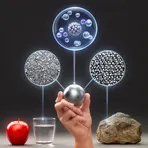
A scientific idea that all matter is made of tiny particles called atoms


 1
9.8
1
9.8
The idea that all matter is made of tiny particles too small to divide
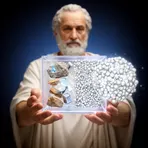
A theory that says all matter is made of tiny particles that cannot be divided called atoms
Surface Forms
Morphology
The phrase is a straightforward adjective+noun composition: if a learner knows 'atomistic' (consisting of distinct, separate components) and 'theory' (a set of ideas explaining facts), they can infer it refers to a theory positing matter is made of discrete atoms. This compositional pattern is literal and cross-linguistically common, so the meaning is immediately derivable from the constituents.
Etymology
Atomistic theory comes from the old idea that matter is made of tiny, separate particles called atoms. Think of tiny grains of sand that cannot be broken, and because of that image of small, 'indivisible' pieces, the phrase means a theory that things are built from small, separate parts.