
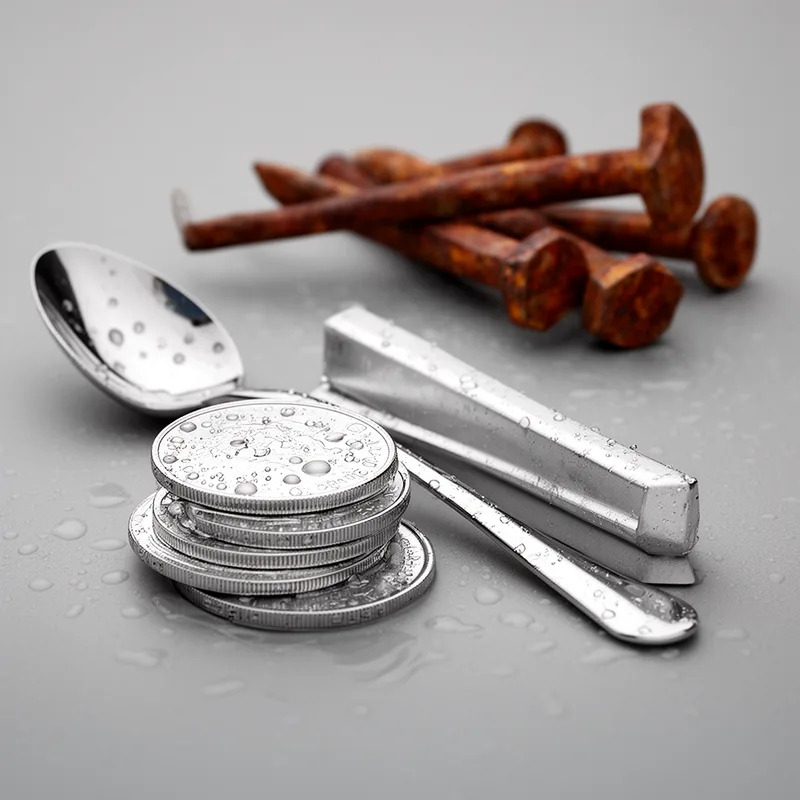
atomic number 28
- noun
- /əˈtɑːmɪk ˈnʌmbər 28/
- Specialized
- Nickel, with an atomic number 28, is used in many alloys.
Examples
-
The atomic number 28 corresponds to nickel.
-
Stainless steel contains atomic number 28 to enhance its resistance to rust.
-
Chemists often refer to nickel as atomic number 28 in scientific contexts.
-
The coins were made using atomic number 28 for increased durability.
-
Chemists often refer to atomic number 28 when discussing the properties of nickel.
-
Stainless steel contains atomic number 28 to improve its corrosion resistance.
-
Many coin manufacturers use atomic number 28 in their metal blends for better durability.
Synonyms

 27
4.8
27
4.8

A hard, silvery metal used with other metals and for coatings
 3
4.9
3
4.9
The chemical symbol for nickel, a hard shiny metal used in alloys
Surface Forms
Morphology
atomic + number + twenty-eight
The phrase is compositionally clear: a learner who knows 'atomic', 'number' and 'twenty-eight' can infer it refers to the element whose atomic-number property is 28. However, identifying that atomic number 28 corresponds specifically to the element nickel requires domain knowledge (the periodic table), so the exact identity is not predictable for a B1 learner.
Etymology
Atomic number 28 comes from chemistry and is a label for the metal 'nickel'. The word atomic points to an atom and the word number (28) shows how many tiny positive particles called protons are inside that atom, so the label is used to mean the element 'nickel'.