
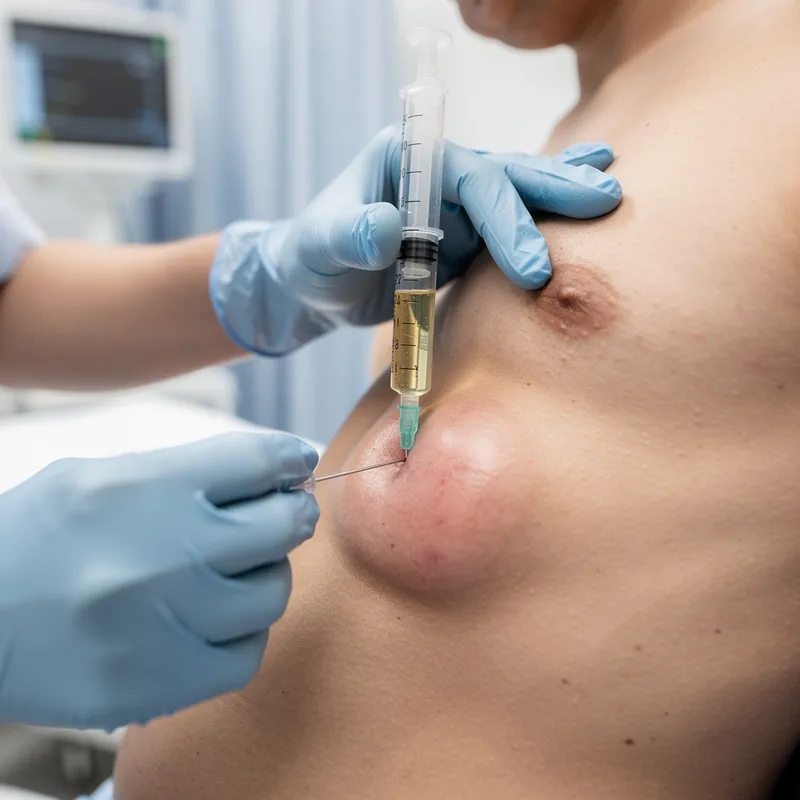
to aspirate
 2
7.2
2
7.2

- verb
- /ˈæspəˌreɪt/
- Specialized
- Each mass was usually only aspirated one time.
- aspirate with a needle
- aspirated material
Examples
-
Following insertion, a small amount of blood was aspirated from the lumen.
Academic text (2008) -
The patient will still experience some relief after the effusion has been aspirated; however, because the swelling is caused by an increase in SF production.
Academic text (2002) -
There is no need to aspirate, and only gentle pressure should be applied after administration if bleeding occurs.
Academic text (2012) -
Missing the joint capsule may result in an effusion that must be aspirated.
Academic text (2002) -
Ten ml of pus was aspirated from the right side and 4 ml from the left side.
Academic text (2005) -
The entire right breast was red and swollen (Figure 1A); therefore, a large volume of hyaluronic acid and pus was aspirated from the breast.
Academic text (2015) -
In the first patient (A), 12 ml of bile was aspirated from the gallbladder and given with cyclosporin to facilitate its absorption.
Academic text (1991) -
Material from the maxillary sinuses was aspirated into a syringe through an 18-gauge needle, which was used to puncture the inferior meatus.
Academic text (2003) -
The doctor will aspirate the fluid from the swollen knee joint to relieve pressure.
-
In the procedure, we will aspirate the pus from the infected wound using a syringe.
Synonyms
 337
1.0
337
1.0
To pull liquid into the mouth, for example with a straw
 18
3.8
18
3.8
Remove something from where it is, for example a nail or a secret
 16
4.5
16
4.5
Pull something out of a place by using air to draw it in
How Thorough

Surface Forms
Morphology
aspirate = aspire (opaque) = aspir + ate
The medical sense 'to remove by suction' is specialized and not derivable from the common meaning of 'aspire' for most learners.
Etymology
Aspirate in medicine also goes back to Latin spirare 'to breathe' and a later sense 'to draw in'. To remember, think of a syringe 'breathing' fluid into itself — to aspirate is to pull fluid out by suction.