
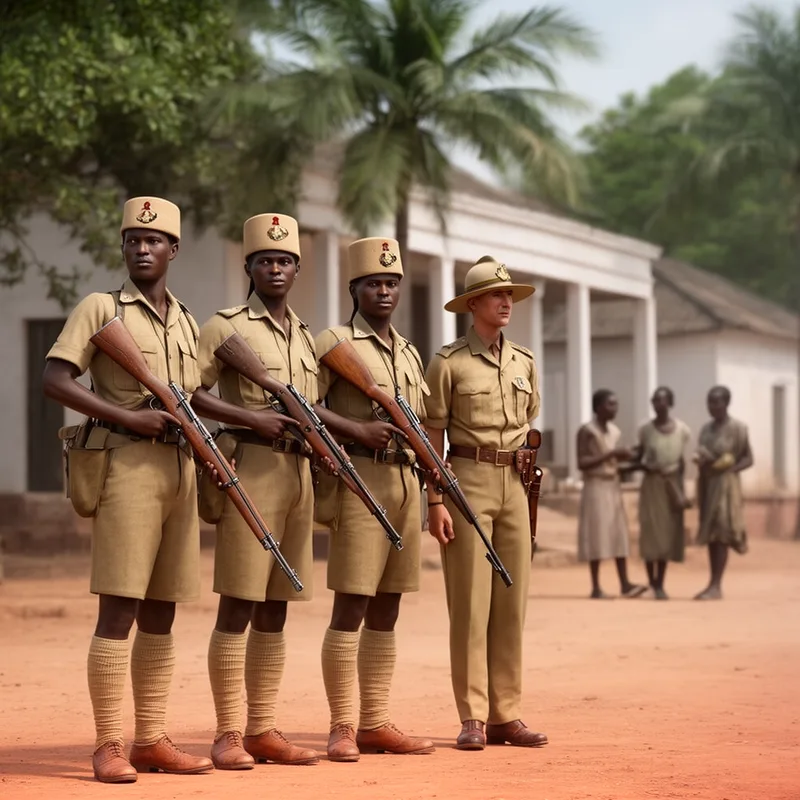
askari


 1
9.9
1
9.9
- noun
- /æˈskɑːri/
- Archaic
- To that end, I questioned the askari over and over again, even going so far as to order that a savory dish be prepared and brought into the room so that the promising aroma of food might loosen his half-starved tongue, and at last it did.
Examples
-
During the colonial era, many askari were tasked with maintaining order in the local villages.
-
In this case, of course, the intrusion of askari belies the very recent colonial origins of these particular vinyago (the generic word in Swahili for indigenous initiation figures).
Academic text (2004) -
Carefully, I offered the askari a cigarette.
Fiction book (1990) -
"Only merchant," the askari repeated.
Fiction book (1990) -
Picking up the savory dish, I handed it to the askari and sent him immediately from the room under guard.
Fiction book (1990) -
The askari's eyes were absolutely riveted on the plate.
Fiction book (1990) -
By the time our patrol caught up with them, two more of the bearers were going out of their minds, and one askari had wandered off in a daze.
Fiction book (1990) -
The askari, it seemed, had family in Mombasa, and with a promise of parole in exchange for information, he spoke freely enough, telling me that this particular raid had set out fourteen days before from a camp south of Moshi, led by the same European color sergeant who had died in the bush.
Fiction book (1990) -
Mtepwa, who had become quite wealthy, hired some 500 askari, placed them under the command of the notorious ivory poacher Alfred Henry Pym, and sat back to await the results.
Fiction book (1994) -
The presence of an askari patrolling the area gave the settlers a sense of security.
Synonyms
 9
2.8
9
2.8
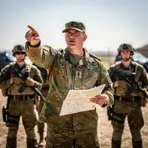
A person who leads soldiers and has power to give orders in the army
 2
3.5
2
3.5
A soldier who enforces rules and guards prisoners
 1
9.8
1
9.8
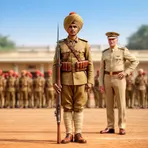
An Indian soldier who served under British officers when Britain ruled India
Surface Forms
Etymology
Askari comes from the Arabic word askar meaning 'army' or 'soldier', and it entered Swahili and other local languages in East Africa. During colonial times Europeans used local troops called askari, so the word also means a soldier or police officer who served under European command.