

artifice
 11
8.1
11
8.1

- noun
- /ˈɑːrtɪfɪs/
- Formal
- You, of all people, should appreciate what I'm trying to teach these people, the artifice, the necessary lie that we all needed to survive.
- art and artifice
Loading YouTube…
Watch on YouTubeIt's a taste for the unnatural, for artifice and exaggeration.
- It's a taste for the unnatural, for artifice and exaggeration.
- Sometimes it seems that way, that they're presumed benevolence is just an artifice for their own benefit.
- And that's always, there's always artifice there.
- That overestimation, the temporary suspension of the critical pendulum was only an artifice for luring forth the soul of the thing.
- She said, I want to go back to the artifice.
Examples
-
I think I can make you an actress of truth, not a creature of artifice.
-
The play addresses existential issues of freedom, oppression, social artifice, and the relation of man to God.
Academic text (1990) -
And as little artifice between the character and the audience as possible.
-
The artist tries to fool our brains into seeing an artifice as real.
-
In this piece, Jackson played with the meaning of "natural," a Rousseauian artifice if there ever was one.
Academic text (1998) -
The players, I think, must strive to maintain the mask of social artifice whilst revealing to the audience what lies behind such manners.
-
It's a taste for the unnatural, for artifice and exaggeration.
-
Joe licked his lips, knowing that this was no more than artifice, but impressed nevertheless.
Fiction book (1994) -
For every article extolling the authenticity of a star's glamour, there was another exposing its artifice.
Academic text (2017) -
The magician's greatest artifice was making the rabbit disappear in front of the audience.
Synonyms
 102
4.9
102
4.9
A clever plan used to get a result, often to trick people
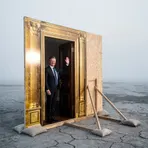 76
7.4
76
7.4
A false show that hides what is really happening
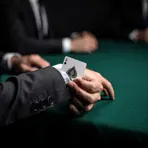 66
4.6
66
4.6
Dishonest action meant to trick someone
 53
7.7
53
7.7
A clever trick to deceive someone
 27
4.9
27
4.9
To use dishonest ways to cheat people
 19
9.5
19
9.5
A trick or excuse to hide the real reason
 18
9.3
18
9.3
A trick used to cheat people, often to get their money
 11
4.9
11
4.9
An unfair action meant to harm or cheat someone
 9
7.1
9
7.1
An action or statement that hides the real reason behind something
 9
8.1
9
8.1
Words or actions that trick people by seeming magical
 8
9.3
8
9.3
Tricks people use to deceive others to get money or advantage
 8
6.8
8
6.8
A false appearance that hides someone's true feelings or plans
 7
8.5
7
8.5
A clever plan to trick someone and gain an advantage
 6
4.3
6
4.3
A trick that makes something look like real magic
 4
6.3
4
6.3
An invented story or plan made to trick people
 1
8.1
1
8.1
A plan made to trick people
 1
8.5
1
8.5
A secret plan to trick people by making something seem accidental
 1
5.0
1
5.0
A clever way to trick someone to get what you want
 1
9.9
1
9.9
A trick done to cheat or fool people
 1
7.4
1
7.4
A person or thing that seems harmless but secretly causes harm


 1
9.5
1
9.5
A dishonest trick someone uses to get an advantage

A clever but dishonest plan to gain an advantage

Tricky or dishonest actions used to confuse people and gain advantage

Dishonest actions that try to trick people
Antonyms


How Deceptive

Surface Forms
Etymology
The word artifice comes from Latin parts art- ('skill') and facere ('to make'), the same idea you see in art and artificial. So an artifice is something 'made with skill', often a clever, tricky way to hide the truth.