

articulation
 1
4.6
1
4.6

- noun
- /ˌɑːrtɪˈkjuːleɪʃən/
- Specialized
- The teacher emphasized the importance of clear articulation when pronouncing difficult words to help the students understand.
- articulation rate
- place of articulation
- articulation tone
Examples
-
There were also significant concerns about his articulation, and a screening was conducted to document his articulation errors.
Academic text (2013) -
So far, we have argued that motor equivalence is important for efficient articulation, including coarticulation.
Academic text (2011) -
However, no gender effect for articulation rate during reading was found in the present study.
Academic text (2012) -
Additionally, the teacher could model writing a T at the points where articulation should occur.
Academic text (2012) -
To collaborate successfully, students must perform at tempo with correct notes, articulation, and dynamics.
Academic text (2011) -
Most choirs have problems with rhythm, intonation, dynamics, diction, blend, articulation, and expression because of poor breath.
Academic text (2005) -
Good articulation of sounds is essential for effective communication in any language.
-
Practicing articulation can improve your speech clarity, especially during public speaking events.
Antonyms


Compounds
- Specialized
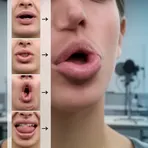
A way of making speech sounds that uses four lip movements
How Precise

Surface Forms
Morphology
articulation = articulate (transparent) = articulate + ion
The noun 'articulation' is transparently derived from the verb 'articulate' by adding the suffix '-ion', indicating the act or process.
Etymology
Articulation comes from the Latin articulare ('to join') and articulus ('little joint'), and people used the same idea for speech by seeing the tongue, lips and teeth as small joints working together, so articulation in speaking is the joining of mouth parts to make clear sounds.