

articulation
 9
4.6
9
4.6

- noun
- /ˌɑːrtɪˈkjuːleɪʃən/
- NDNP grant application guidelines stipulate the articulation of a plan to involve an advisory board in the selection process.
- clear articulation
- articulation rate
- articulation tests
Loading YouTube…
Watch on YouTubeAnd we have two beautiful articulations of that.
- And we have two beautiful articulations of that.
- There had to be some, some learning and articulation that that needed to take place.
- And even his articulation, once shared, gets to be mine as well.
- So I'm the product of all of that and the articulation and the essay.
- Cultures develop and continue to develop in the articulation of new conversations.
- But reading books, self help books, elevating better vocabulary, better articulation, You want to elevate mentally?
- And even just hiding, I was hiding and I'm well enough to be able to talk about it with some sort of articulation and, and knowledge.
- In all cases, articulation of principles and values on human rights and democracy should be designed to persuade, not to score points.
- He does thrive on this stuff, but his articulation of why he's running is to go back to what was doesn't have really a why for the future.
Examples
-
Cultures develop and continue to develop in the articulation of new conversations.
-
As I think I told you, your articulation in London was absolutely brilliant.
Fiction book (2000) -
There had to be some, some learning and articulation that that needed to take place.
-
And even his articulation, once shared, gets to be mine as well.
-
It's the first time that there's been this kind of articulation in policy of the need to do this.
Academic text (1999) -
At this point, his articulation errors were interfering with others' ability to understand him.
Academic text (2013) -
And feedback must be given clearly in articulation, preferably in writing, and most importantly, very quickly.
-
One basic premise of this study is that adults can perceive fine differences in articulation in children's speech.
Academic text (2012) -
Moya demonstrates the intersections between race and class in perceptions and articulations of masculinity.
Academic text (2017) -
The teacher praised the student's clear articulation of her ideas during the debate.
Synonyms
 230
3.4
230
3.4
The way someone shows thoughts and feelings in speech and writing
 8
3.0
8
3.0
A person's ability to speak or write a language easily and smoothly
 3
5.5
3
5.5
Clear speech that is easy for people to understand
 3
8.5
3
8.5
The ability to speak clearly and expressively
 2
4.1
2
4.1
The ability to show feelings or ideas clearly in words, art and movement
 1
5.6
1
5.6
Putting thoughts or feelings into words so others can understand them


 1
6.7
1
6.7
The ability to speak or write clearly and well
 1
6.9
1
6.9
How clearly and strongly someone shows thoughts or feelings

To show ideas and feelings using spoken or written words

Using words to express ideas, beliefs or opinions in speech and writing

The ability to speak ideas clearly when talking to others

Clear and simple writing or speech that is easy to understand

Clear and easy to understand in writing or speech
Antonyms

Compounds
- Specialized
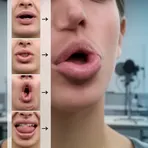
A way of making speech sounds that uses four lip movements
How Clear

Surface Forms
Morphology
articulation = articulate (transparent) = articulate + ion
The noun 'articulation' is transparently derived from the verb 'articulate' by adding the suffix '-ion', indicating the act or process.
Etymology
Articulation comes from the Latin articulare, which meant 'to join' and from articulus meaning 'little joint'; think of putting your ideas into clear, joined parts so others can follow, which is why articulation means expressing thoughts clearly.