
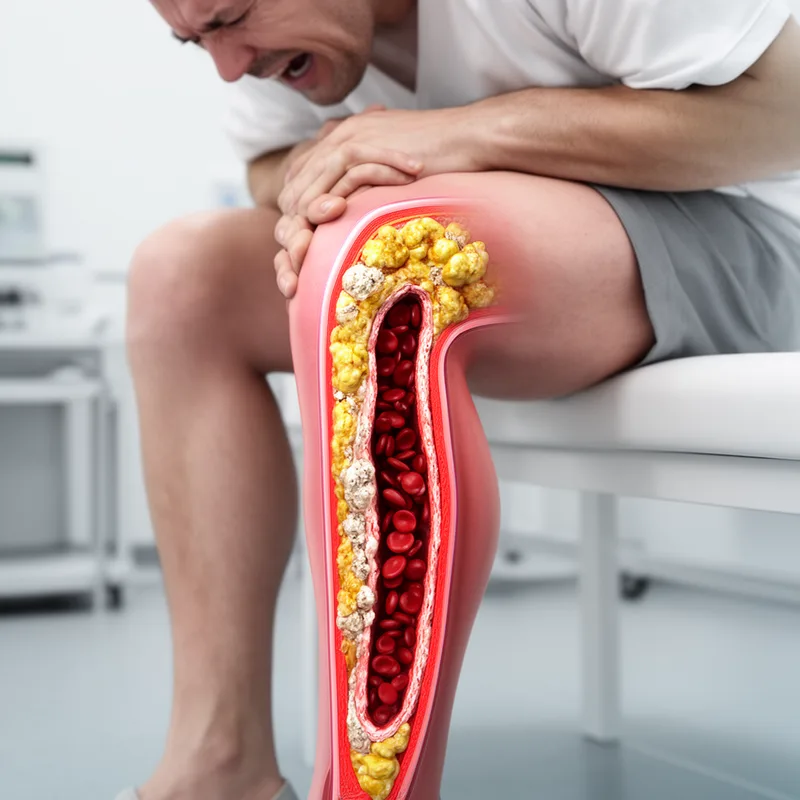
arteriosclerosis obliterans
- noun
- /ˌɑːr.tɪ.əˌskləˈroʊ.sɪs əˌblɪt.əˈrænz/
- Specialized
- Early diagnosis of arteriosclerosis obliterans is crucial to prevent limb loss.
Examples
-
The surgeon explained that arteriosclerosis obliterans was the cause of the patient's chronic leg pain.
-
Peripheral blood flow can be severely restricted in patients with arteriosclerosis obliterans.
-
The patient was diagnosed with arteriosclerosis obliterans last week.
-
Doctors often see arteriosclerosis obliterans in older patients.
-
Early diagnosis of arteriosclerosis obliterans is crucial to prevent limb loss.
-
The surgeon explained that arteriosclerosis obliterans was the cause of the patient's chronic leg pain.
-
Peripheral blood flow can be severely restricted in patients with arteriosclerosis obliterans.
How Severe
- Specialized

- Specialized
 1
7.4
1
7.4

Surface Forms
Morphology
arteriosclerosis + obliterans
This is a compositional medical compound: 'arteriosclerosis' denotes thickening/hardening of arteries that restricts flow, and 'obliterans' is a medical/Latin participial form meaning 'obliterating' or causing closure. Combined, the phrase straightforwardly means arteriosclerosis that causes obliteration/closure of vessels, so a learner who knows both constituents can derive the meaning.
Etymology
Arteriosclerosis obliterans is built from parts: arterio- means 'artery', sclerosis means 'hardening', and obliterans means 'blocking'. Think of an artery as a soft pipe that becomes stiff and filled so the flow stops; that image explains why the term refers to arteries that have thickened, hardened and become 'blocked'.