
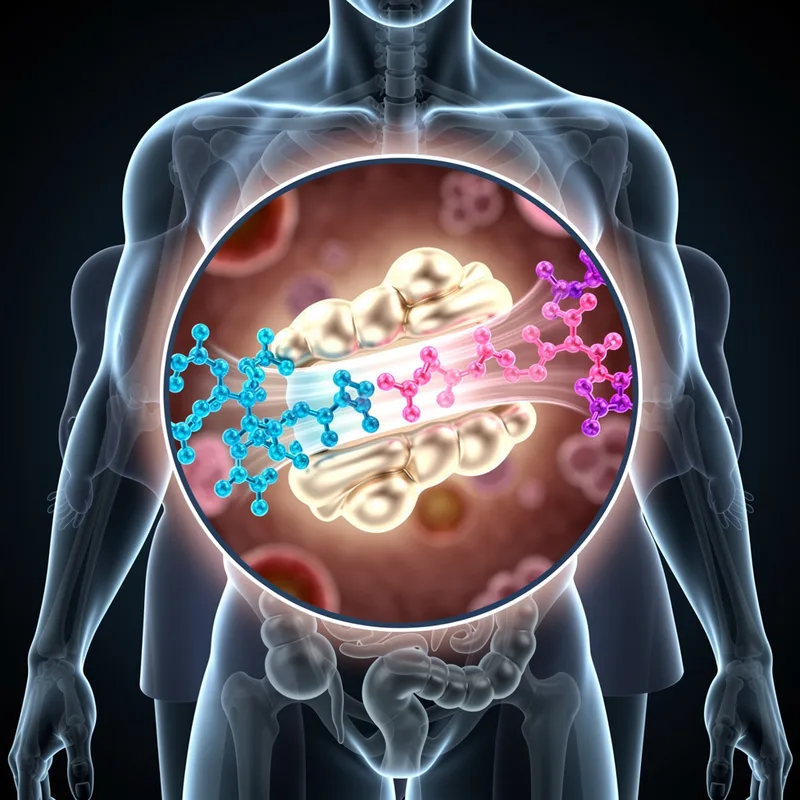
aromatase
 1
9.2

- noun
- /əˈroʊməˌteɪs/
- Specialized
- One class of drugs, the aromatase inhibitors (AIs), prevents estrogen production from precursor hormones by targeting the aromatase enzyme 46,47.
- aromatase activity
- aromatase inhibitors
- aromatase enzyme
Loading YouTube…
Watch on YouTubeThere are neurons in the brain that make aromatase and convert testosterone into estrogen, and it is testosterone converted into estrogen.
- There are neurons in the brain that make aromatase and convert testosterone into estrogen, and it is testosterone converted into estrogen.
- And for that reason, do you shy away from people taking aromatase inhibitors?
Examples
-
One of the mechanisms involved in the pathophysiology of hypogonadism associated with obesity is the increased aromatase activity in adipose tissue.
Academic text (2018) -
Aromatase converts testosterone to estradiol, which has an inhibitory effect on the production of LH in the pituitary gland.
Academic text (2018) -
And for that reason, do you shy away from people taking aromatase inhibitors?
-
Finally, we still do not understand why aromatase is expressed at such high levels in the telencephalon of both male and female songbirds.
Academic text (1994) -
The use of letrozole, an aromatase inhibitor, has been investigated.
Academic text (2018) -
One possibility is that the high expression of aromatase in the telencephalon is linked to the complex expression of song observed across songbird species.
Academic text (1994) -
As we predicted, aromatase activity in male telencephalic microsomes was high and similar to that seen in the female ovary.
Academic text (1994) -
In post-menopausal women with estrogen receptor-positive early breast cancer, aromatase inhibitors, e.g., anastrozole (Arimidex), are now recommended.
Academic text (2012) -
The important hormonal pathway governing bidirectional sex change turned out to be the aromatase pathway, aromatase being an enzyme that catalyzes the irreversible conversion of testosterone to estradiol.
Academic text (2013) -
The enzyme aromatase is essential for converting testosterone into estrogen in the human body.
Surface Forms
Morphology
aromatase = aromatic (opaque) = aromat + ase
The combining form 'aromat-' and the enzyme suffix '-ase' are technical and biological; an average B1 learner is unlikely to infer the enzyme's function from 'aromatic' + '-ase'.
Etymology
Aromatase comes from aroma, a word for 'smell', and the enzyme ending -ase, which means 'enzyme', so a helpful way to remember it is to think of aroma plus -ase as in lipase. In chemistry 'aromatic' also means a certain ring shape, and aromatase changes part of a hormone into that form, which is why it converts androgens into estrogens.