

areolate
- adjective
- /ˈɛəriəˌleɪt/
- Specialized
- Under the microscope, the areolate structure of the tissue became apparent.
Examples
-
The leaves of this cactus have an areolate pattern that helps conserve water.
-
In histology, certain glands are described as areolate due to their divided sections.
-
The plant's leaves were areolate and distinct.
-
This species features areolate patterns on its surface.
-
The leaves of this cactus have an areolate pattern that helps conserve water.
-
Under the microscope, the areolate structure of the tissue became apparent.
-
In histology, certain glands are described as areolate due to their divided sections.
Synonyms

Thin tissue with many small spaces that helps hold and support parts of the body

Having small hollow spaces like a honeycomb
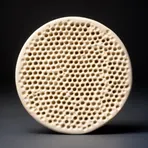
A surface with many small honeycomb-like holes
How Divided


Surface Forms
Morphology
Etymology
Areolate comes from areola, a small form of area that means 'small area' or 'open space'. So, something areolate looks split into many little areas, like a honeycomb, and that is why the word means 'having a surface divided into small spaces'.