
arbuscular


 1
9.9
- adjective
- /ˌɑːrbəˈskjʊlər/
- Specialized
- Photo (color): A microscopic view of an arbuscular mycorrhizal fungus growing on a corn root.
- arbuscular mycorrhizal
- arbuscular mycorrhizal fungi
- arbuscular-mycorrhizal community
Examples
-
Similar results have also been reported for arbuscular mycorrhizal fungi (Vandenkoornhuyse et al. 2003).
Academic text (2008) -
Examples of spores and colonization by arbuscular mycorrhizal fungi.
Academic text (2001) -
Spores of arbuscular mycorrhizal fungi from our study site.
Academic text (2001) -
Basics of arbuscular mycorrhizal fungal biology and taxonomy
Academic text (2001) -
Sampling effort curves depicting the rate of discovery of arbuscular mycorrhizal fungal species at our site against years and number of samples.
Academic text (2001) -
Consequently, AM fungi are also known as vesicular-arbuscular mycorrhizal, or VAM, fungi.
Academic text (2001) -
Wright named glomalin after Glomales, the taxonomic order that arbuscular mycorrhizal fungi belong to.
Academic text (2002) -
Associations with arbuscular mycorrhizal fungi increase plant access to scarce or immobile soil minerals, particularly phosphorus, and thereby increase plant growth rates.
Academic text (2001) -
Levels were maintained or raised by no-till, cover crops, reduced phosphorus inputs, and the sparing use of crops that don't have arbuscular mycorrhizal fungi on their roots.
Academic text (2002) -
Most land plants form symbiotic relationships with arbuscular mycorrhizal fungi, which enhance nutrient exchange.
How Tree-Like

Surface Forms
Morphology
Etymology
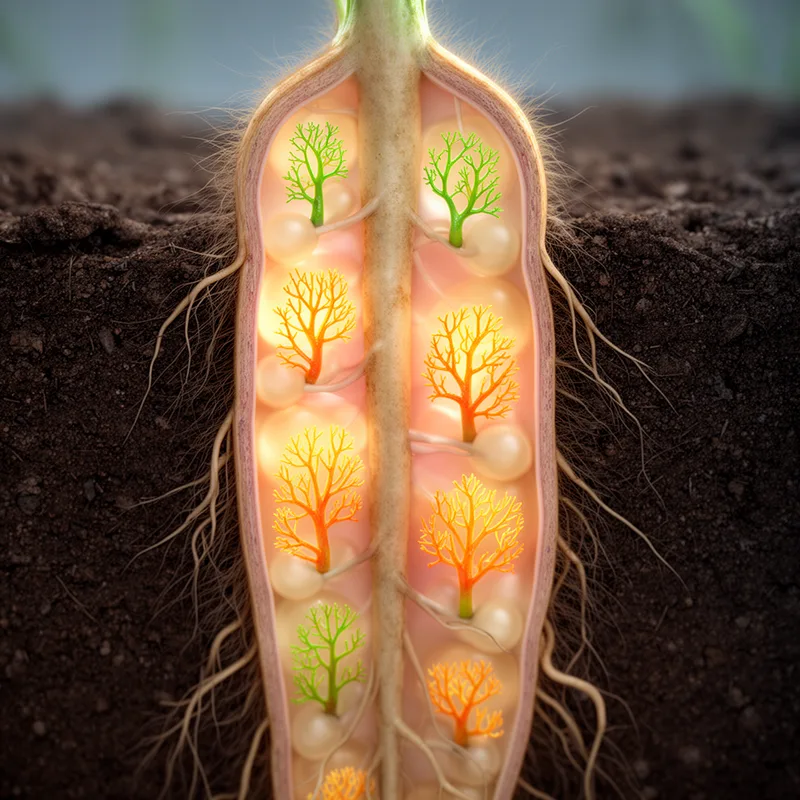
Arbuscular comes from the Latin word arbor meaning 'tree' and from the small form arbuscule meaning 'little tree'. So, something arbuscular is tree-like or branching in shape, for example fungi that make tiny, tree-shaped branches inside plant roots.