
approximant
- noun
- /əˈprɑksɪmənt/
- Specialized
- Students often find approximants like 'j' and 'w' challenging to pronounce correctly in their language lessons.
Examples
-
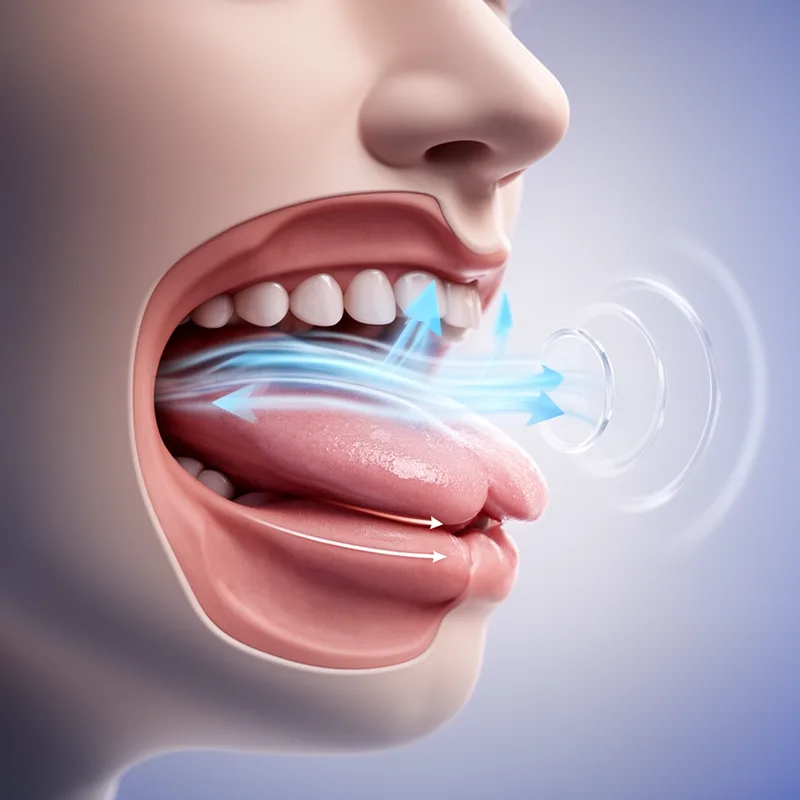
The English phoneme 'r' is classified as an approximant because the tongue approaches the roof of the mouth without making contact.
-
In linguistics, the sound approximant is produced when the airflow is narrowed but does not create friction, such as the sounds 'w' and 'l'.
-
Gliding: A consonant is replaced by the approximants w and j, known as glides, for example, bajo instead of ba o for bath.
Academic text (2012)
How Prolongable
- Specialized
 23
1.0
23
1.0


- Specialized

 1
7.6
1
7.6
- Specialized
- Specialized
- Specialized
- Specialized
Surface Forms
Morphology
approximant = approximate (semi-transparent) = approximate + ant
Formally derived from 'approximate' + '-ant' meaning 'one that approximates', but the phonetic technical sense is specialized and not fully predictable for general learners.
Etymology
Approximant comes from the same Latin root as approximate and proximity, which mean 'near' or 'close'. In speech, an approximant is a sound that comes 'near' another part of the mouth without touching it, so the name shows it is 'close' but not a full contact sound.