

apoplexy
 2
9.9
2
9.9

- noun
- /ˈæpəˌplɛksi/
- Archaic
- You'll give yourself an attack of apoplexy if you're not careful.
- suffered an apoplexy
- died of apoplexy
- driven to apoplexy
Examples
-
Dear God, have I given him apoplexy?
Fiction book (1991) -
But it was reasonable to assume that Buldram had suffered an apoplexy while raging about the splinter.
Fiction book (2002) -
A certain kind of apoplexy came over him when things had to be done.
Fiction book (1993) -
If the very idea gives you apoplexy, you can understand how I feel.
Blog text (7) -
You see, he's subject to apoplexy.
-
The physical price for these labors, however, was an attack of apoplexy on February 1, 1912.
Academic text (1991) -
Permit me to rouse my poor uncle, else he may die of apoplexy.
-
Apoplexy was diagnosed, and Dickens died the next evening without having regained consciousness.
Academic text (2001) -
Dickens was known to have had a definite attack of right-sided cerebral insufficiency, and he died of apoplexy affecting the right side of the brain.
Academic text (2001) -
He was so angry that he nearly had an attack of apoplexy.
Synonyms
 232
3.7
232
3.7
A sudden loss of movement, speech, or thinking when blood stops flowing to part of the brain
 3
9.9
3
9.9
A sudden strong burst of feeling, for example coughing or laughter
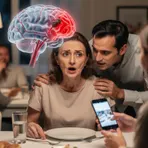 1
5.5
1
5.5
A sudden brain injury when blood cannot reach part of the brain, causing weakness or trouble speaking


 1
5.8
1
5.8
A sudden event when blood flow to the brain stops and parts of the brain stop working, called a stroke

A sudden very angry reaction that people show loudly or violently
Antonyms


Surface Forms
Etymology
Apoplexy comes from the Greek parts apo- 'away' and plēxis 'a strike'. It originally meant 'a striking away', so think of being suddenly 'struck' and losing control, which is why it was used for a stroke and later for extreme anger.