

apnea
 24
7.1
24
7.1

- noun
- /æpˈniːə/
- Specialized
- The doctor explained that untreated apnea can lead to serious health problems.
- sleep apnea
- obstructive apnea
- snoring and apnea
Loading YouTube…
Watch on YouTubePinea, sort of, you know, you've had a pneumonia and it this is about breath and apnea is about an absence of that breath.
- Pinea, sort of, you know, you've had a pneumonia and it this is about breath and apnea is about an absence of that breath.
- There are a lot of reasons for apneas ranging from obesity to obstruction of of the Airways for other reasons.
- What is the relationship though between sleep apnea and the urge to pee?
- But in sleep apnea, the brain would rather sleep than breathe.
- Also, the added bonus was I got rid of my sleep apnea.
- Obstructive sleep apnea, yeah, that can cause secondary hypertension.
- And that's at the most mild form of sleep apnea.
- Your first question, which dog breed is the only canine known to experience sleep apnea?
- But just because you don't have clinical apnea or whatever doesn't mean you don't have sub clinical.
- But I saw my father have a heart attack, become obese, sleep apnea.
- Many people sleep apnea have heartburn, GERD, or acid reflux or some type of digestive issue that's causing their sleep apnea.
Examples
-
Sleep apnea is short for obstructive sleep apnea or OSA.
-
I have sleep apnea, not narcolepsy.
-
So a lot of us know by now, sleep apnea is such bad news.
-
It's got my sleep apnea machine in there.
-
If sleep apnea is treated, is it still a risk factor?
-
Now I'm pretty sure I'm dealing with sleep apnea, which is it's pretty bad.
-
But one of the things they're obsessed with is my sleep and sleep apnea and put me through a bunch of different sleep tests.
-
I have sleep apnea.
-
He has developed acid reflux and sleep apnea.
-
So if you start loudly, if you stop breathing at night, if you're chronically tired during the day, you should get sleep apnea checked.
Synonyms
 9
4.1
9
4.1
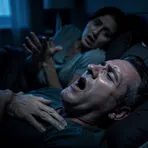
Breathing stops for short times during sleep, causing poor sleep and health risks
Antonyms

Compounds
- Specialized
9
4.1
Breathing stops for short times during sleep, causing poor sleep and health risks

- Specialized
Newborn babies breathe quickly and then stop for short times
How Deep
2
6.8

- Specialized
- Specialized
- Specialized
- Specialized
24
7.1
Surface Forms
Morphology
apnea = a + pnea
Although historically analyzable as a- (not) + pnea (breath), 'pnea' is a Greek combining form not a standalone English word and the medical prefix 'a-' is not obvious to an average B1 learner, so the meaning must typically be learned as a lexical item.
Etymology
Apnea comes from the Greek parts a- ('without') and pnea ('breath'), so it literally means 'without breath'. That's why apnea refers to a temporary stopping of breathing, for example during sleep.