
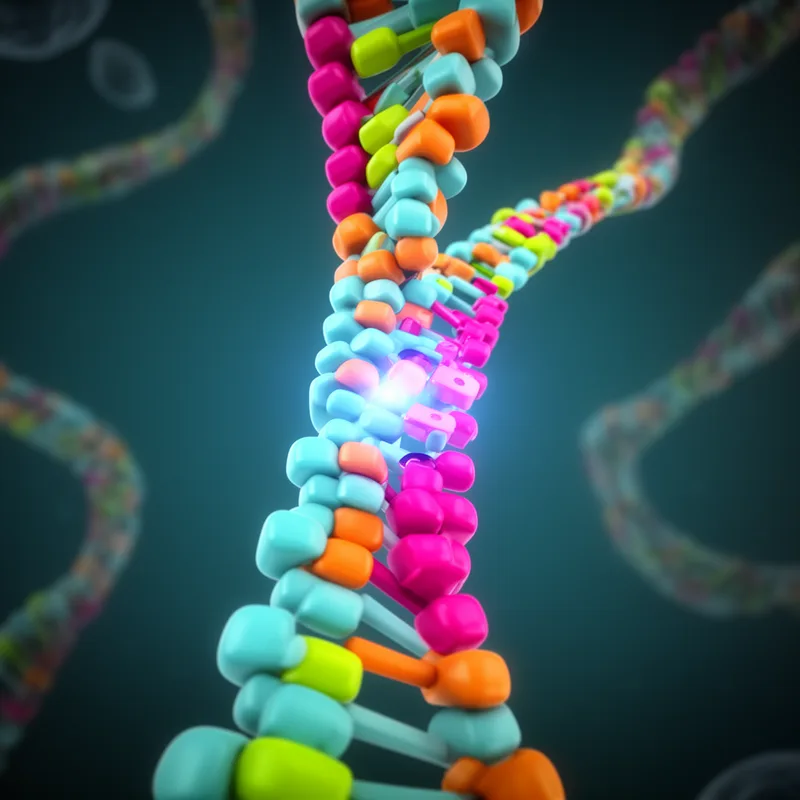
antisense
 1
9.2

- adjective
- /ˈæntiˌsɛns/
- Specialized
- Alternatively, some types of short antisense sequences can be synthesized in vitro and added directly to cell culture medium.
- antisense RNA
- antisense drugs
- gene with antisense
Examples
-
The antisense strand of DNA is designed to match with the target coding sequence, effectively blocking protein production.
-
Equally astonishing is the extent of antisense transcription, both within and around annotated genes and within nonannotated regions.
Academic text (2010) -
Extinguishing gene function with antisense RNA and DNA.
Academic text (1992) -
This is the antisense approach and makes use of the so-called antisense oligonucleotides 17, 18.
Academic text (2016) -
Basically, two major approaches exist for delivery: viral and non-viral, and depending on whether antisense inhibition or replacement is desired, the appropriate approach(es) are utilized.
Academic text (2016) -
For the first round of PCR, we used antisense primer 1, sense primer TATGGGCATGGHATHCCYCT, and Taq-DNA polymerase (GIBCO BRL).
Academic text (1996) -
For example, in studies of tobacco plants, an antisense version of the gene coding for the small subunit of Rubisco was inserted, resulting in a range of genotypes with variable amounts of the Rubisco protein, which is responsible for carbon fixation in photosynthesis.
Academic text (2000) -
In gene therapy, researchers often use antisense RNA to inhibit the expression of specific genes.
-
Using antisense oligonucleotides allows scientists to study gene function by preventing its expression in cells.
Surface Forms
Morphology
Etymology
Antisense comes from the parts anti- 'against' and sense 'the coding message'. It describes an adjective form of a strand that is opposite the sense strand, so it matches the code and can bind to it to block the gene's message.