
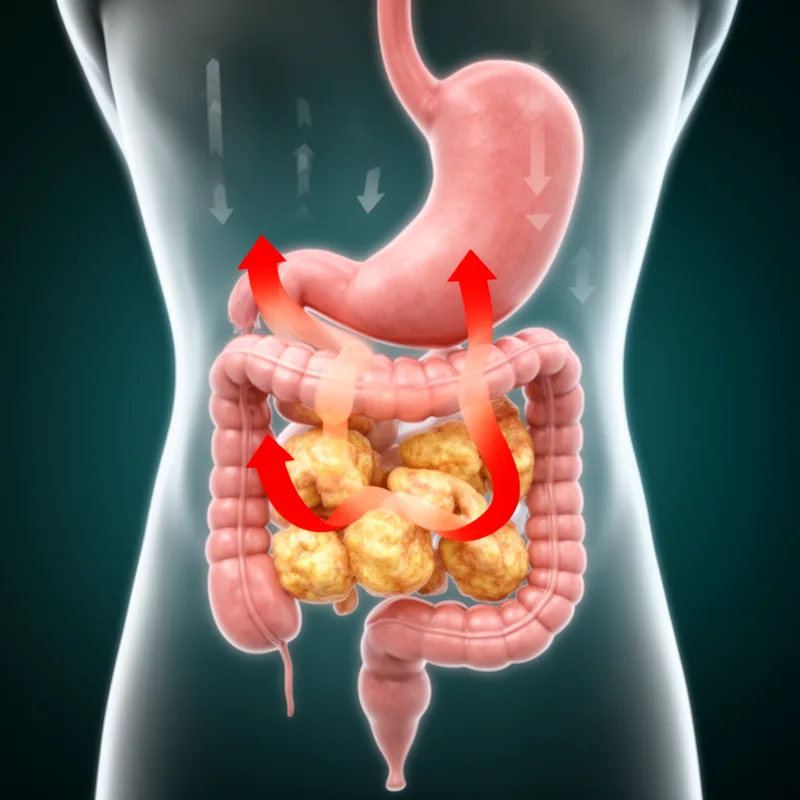
antiperistaltic


 1
9.9
- adjective
- /ˌæntɪpəˈrɪstəltɪk/
- Specialized
- The doctor explained that antiperistaltic movements can lead to vomiting in some patients.
Examples
-
Certain medications may trigger antiperistaltic action in the intestines, causing discomfort.
-
Researchers observed antiperistaltic waves during the experiment on digestive processes.
-
The antiperistaltic movement can cause discomfort.
-
When experiencing nausea, antiperistaltic waves may occur.
-
The doctor explained that antiperistaltic movements can lead to vomiting in some patients.
-
Certain medications may trigger antiperistaltic action in the intestines, causing discomfort.
-
Researchers observed antiperistaltic waves during the experiment on digestive processes.
Synonyms
 1
4.3
Moving in the opposite direction

A nerve impulse that travels the opposite way along a nerve fiber
Antonyms

- Specialized
1
7.2
Causing liquid or food to move through a tube by waves of squeezing like the gut
Surface Forms
Morphology
antiperistaltic = peristaltic (semi-transparent) = anti + peristalt + ic
The prefix anti- clearly signals opposition, and it is directly attached to the technical adjective peristaltic.
Etymology
Antiperistaltic comes from the common prefix anti- meaning 'against' and peristaltic, from peristalsis, the muscle 'wave' that pushes food along the gut. Think of peri- as in perimeter meaning 'around', so antiperistaltic describes movement that goes 'against' the normal squeezing wave and therefore means motion in the opposite direction to normal peristalsis.