
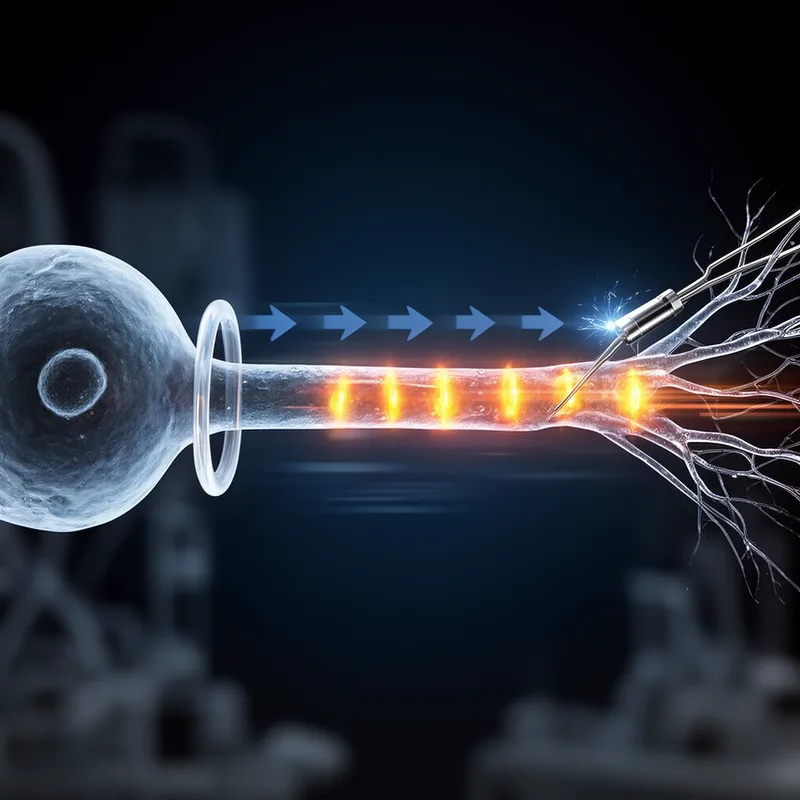
antidromic
9.9
A nerve impulse that travels the opposite way along a nerve fiber
- adjective
- /ˌæntɪˈdroʊmɪk/
- Specialized
:
antidromico
- Antidromic impulses travel back toward the cell body of the neuron rather than away from it.
Examples
-
You should know that antidromic conduction was the major method.
-
In antidromic conduction, the signal moves opposite to the typical direction along the nerve.
-
During the experiment, we observed an antidromic response in the nerve fiber.
Surface Forms
antidromic positive
Morphology
antidromic = anti + drom + ic
The word is formally built from anti- + drom- + -ic, but the Greek root is technical and not readily recoverable for an average English learner.
Etymology
Antidromic comes from the Greek parts anti- 'against' and dromos 'running'. So an antidromic nerve signal is like a runner going the wrong way — a signal that travels in the opposite direction along a nerve instead of the normal way.

