
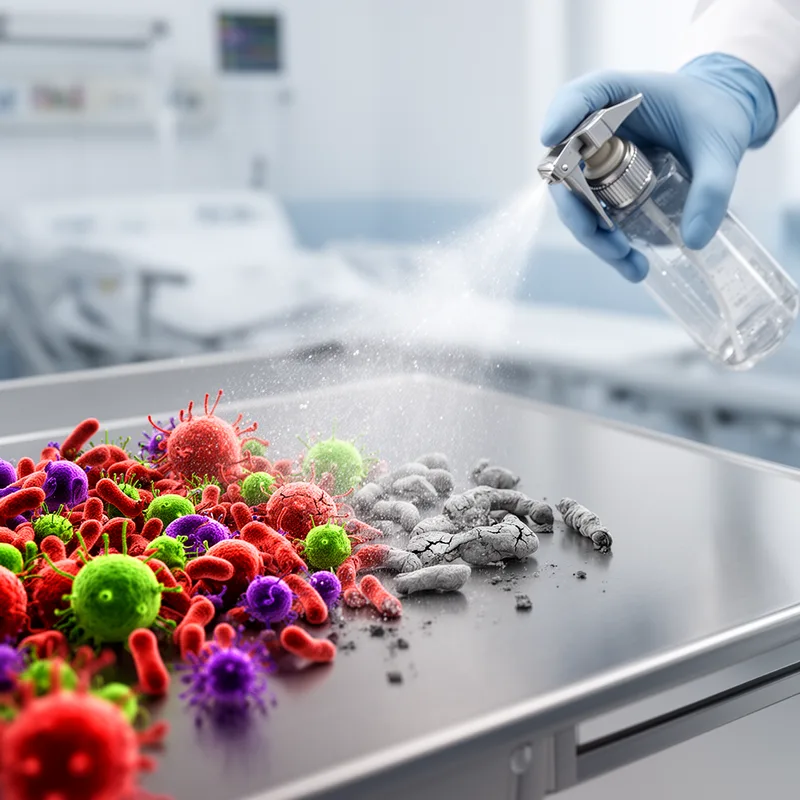
antimicrobial
- noun
- /ˌæntiˈmaɪkroʊbiəl/
- Specialized
 :
antimicrobiano
:
antimicrobiano
- Seven case patients had been prescribed an oral antimicrobial.
Examples
-
The Paneth cells are producing antimicrobial peptides.
-
Telithromycin (HMR 3647) is a new ketolide antimicrobial that was developed for the treatment of community-acquired respiratory tract infections.
Academic text (2003) -
The combination of amoxicillin and the β-lactamase inhibitor clavulanate also makes it a suitable antimicrobial for infections caused by H. influenzae and by M. catarrhalis.
Academic text (2006) -
The doctor prescribed an antimicrobial to treat the patient's bacterial infection.
-
A new study showed that the antimicrobial is effective against various strains of bacteria.
-
Many hand sanitizers contain an antimicrobial to help prevent the spread of germs.
Synonyms


 1
7.2
1
7.2
A substance that kills germs like bacteria and viruses to prevent infection
 1
7.1
1
7.1
A substance that kills germs that can make people sick

A thing like heat, light or a chemical that kills germs and prevents their growth
How Antimicrobial
- Specialized
1
7.2
 23
3.1
23
3.1
- Specialized
- Specialized
3
3.7
- Specialized
14
5.9
Surface Forms
Etymology
Antimicrobial is made from anti- meaning 'against' and micro- meaning 'small', as in microscope. So an antimicrobial is a substance that fights or stops tiny living things like bacteria and other microbes.