
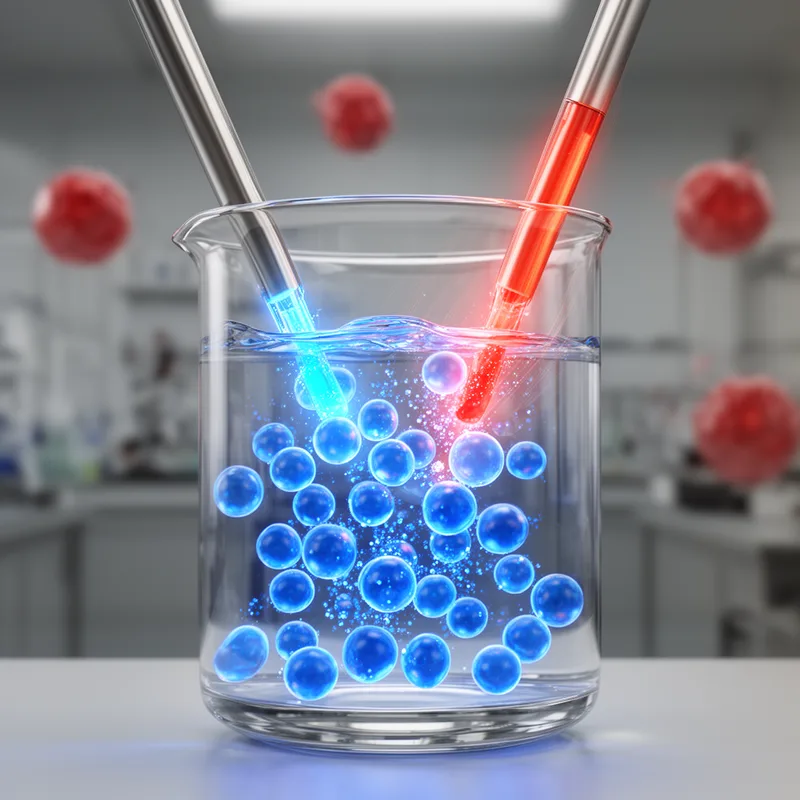
anionic
 1
8.4
1
8.4

- adjective
- /ˌeɪnaɪˈɒnɪk/
- Specialized
- Previous studies have shown that a high level of anionic surfactants in the surface water can be attributed to fuel leakage from fishing boats (Roslan et al. 2010; Scott and Jones 2000).
- anionic surfactants
- anionic-cationic
- anionic energy
Examples
-
The anionic surfactant works better in my hard water, reduces water surface tension, and prevents the dirt from redepositing on my clothes during the wash cycle.
Blog text (18) -
The isomerization occurs via an anionic transition state formed by the movement of M2 to the position M2' (Fig. 4C).
Academic text (2015) -
First Aid Treatment: Contains biodegradable anionic surfactants and enzymes.
Blog text (18) -
Anionic exchange, size exclusion, and covalent affinity.
Academic text (2018) -
Block 1 reported that the incidence of milk fever was reduced from 47.4% in cows fed a cationic diet to 0% when cows received an anionic diet during the dry period.
Academic text (2018) -
The average concentrations of anionic surfactants, as MBAS, and cationic surfactants, as DBAS, recorded at the LM and LK stations are shown in Table 2.
Academic text (2018) -
An estimate of the serum electrolyte levels and measurement of the arterial blood gas level suggested the presence of uncompensated metabolic acidosis with an elevated anionic gap.
Academic text (2008) -
This study confirmed earlier findings of Huang and colleagues, who had found that targeted delivery of miR-29b by transferrin-conjugated anionic lipopolyplex nanoparticles resulted in a profound downregulation.
Academic text (2016) -
In concordance with these notions, AML mice that were treated with transferrin-conjugated anionic lipopolyplex nanoparticles bound to synthetic miR-29b presented with significantly longer survival.
Academic text (2016) -
The detergent contains anionic surfactants that help to produce more foam while cleaning.
Antonyms
Compounds

- Specialized
A man-made cleaning agent with tiny parts that have a negative charge in water
Surface Forms
Morphology
Etymology
Anionic comes from anion, built from Greek parts meaning 'to go' and 'up' because these negative particles moved toward the anode in early electric experiments. So anionic means 'having a negative charge', which is why chemists call negatively charged particles 'anions'.