
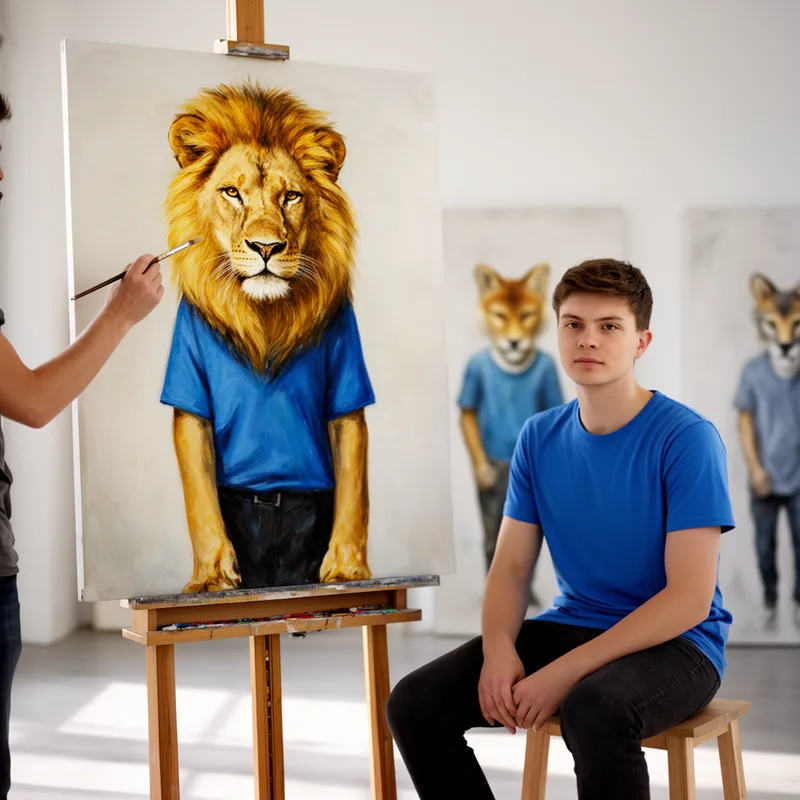
animalization
- noun
- /ˌænɪməlaɪˈzeɪʃən/
- Some myths use animalization to represent gods as creatures such as lions or snakes.
Examples
-
The artist employed animalization to depict human emotions through various animal forms.
-
The animalization of certain characters made the fable more engaging for children.
-
The artist's animalization of human figures is striking.
-
Many cultures use animalization in their folklore.
-
The animalization of the main character in the story highlights the importance of nature in human life.
-
In ancient art, animalization was often used to symbolize divine attributes through animal likenesses.
-
The animalization seen in the sculpture allows viewers to connect with deeper aspects of human behavior.
Synonyms
A way of showing people, gods, or things with animal shapes and features
How Zoomorphic


Surface Forms
Morphology
Etymology
The word animalization comes from animal, which means 'living being', and the part -ize meaning 'to make', with -ation to make it a noun. So animalization means 'making something into an animal' or showing it in the form of an animal, as when artists or stories turn people or gods into lions or snakes.