
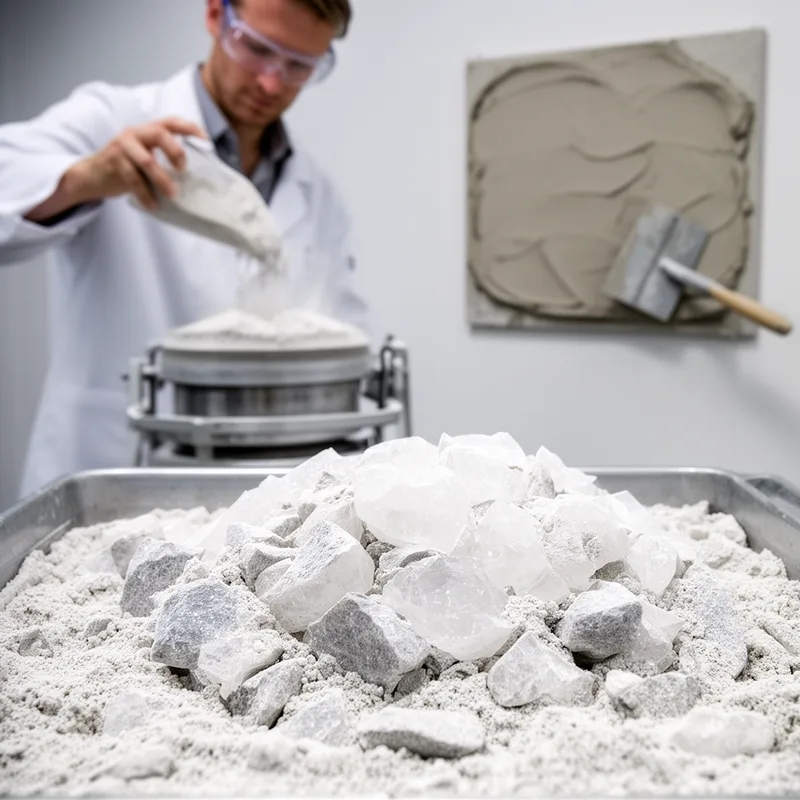
anhydrite
- noun
- /ˈænhaɪˌdraɪt/
- Specialized
- Anhydrite is commonly used as a drying agent in many industrial applications.
Examples
-
The mineral anhydrite is often found in sedimentary rocks.
-
Manufacturers often use anhydrite in the production of certain types of cement.
-
The geologist identified the white crystals as anhydrite during the field survey.
-
Because it contains no water, anhydrite is valuable as a drying agent in industry.
-
Many construction materials contain anhydrite for better durability.
-
The construction workers mixed anhydrite with water to create a strong plaster for the walls.
-
In geology classes, we learned how anhydrite forms under evaporitic conditions.
Synonyms


 1
3.7
1
3.7
A white mineral used to make plaster, improve soil, and to make some foods and medicines
Surface Forms
Morphology
anhydrite = anhydrous (semi-transparent) = an + hydr + ite
Forming a mineral name from an adjective meaning 'without water' is clear in principle, but the Greek combining form 'hydr' and the negative prefix 'an-' are not transparent to many B1 learners.
Etymology
Anhydrite comes from the parts an- 'not' and hydr- 'water', like in hydrate, and the ending -ite often marks a mineral. So anhydrite literally means 'without water', which explains why it is a dry mineral used in plasters, cements, and as a drying agent.