

anapsid reptile
- noun
- /əˈnæpsɪd ˈrɛptaɪl/
- Specialized
- Turtles are the only surviving anapsid reptiles in the modern world.
Examples
-
The solid skull structure is a key characteristic of all anapsid reptiles.
-
Fossil evidence suggests that anapsid reptiles flourished during the Permian period.
-
The anapsid reptile is known for its unique skull structure.
-
Many anapsid reptiles are found in fossil records.
-
Turtles are the only surviving anapsid reptiles in the modern world.
-
Fossil evidence suggests that anapsid reptiles flourished during the Permian period.
-
The solid skull structure is a key characteristic of all anapsid reptiles.
Synonyms
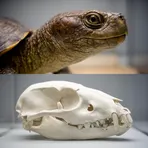
A reptile with no holes on the sides of its skull, like early reptiles and turtles
Surface Forms
Morphology
The phrase is fully compositional: 'anapsid' specifies the skull condition (no temporal openings) and 'reptile' names the animal class, so 'anapsid reptile' directly means a reptile with that skull condition. This is a technical noun phrase rather than an idiom, so a learner who knows both constituent words can derive the overall meaning.
Etymology
The name anapsid reptile comes from old Greek words meaning no opening in the skull. That is why the name means 'primitive reptiles with skulls that have no side openings', and turtles are the only living examples.

