

aminoalkane
- noun
- /əˌmiːnoʊˈælkeɪn/
- Specialized
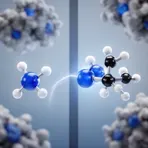
- The simplest aminoalkane is methylamine, which has only one carbon atom.
Examples
-
Butylamine is a type of aminoalkane commonly used in organic synthesis.
-
Many aminoalkane compounds serve as precursors for pharmaceuticals and agrochemicals.
-
An aminoalkane is a type of organic compound.
-
The aminoalkane family includes various compounds.
-
Butylamine is a type of aminoalkane that is commonly used in organic synthesis to create complex molecules.
-
Many aminoalkane compounds are vital as precursors for the development of pharmaceuticals and agrochemicals.
-
The simplest aminoalkane is methylamine, which consists of just one carbon atom and is often used in chemical reactions.
Synonyms
 3
6.9
3
6.9

A chemical created by replacing hydrogen in ammonia with carbon groups
Surface Forms
Morphology
Etymology
Aminoalkane joins amino-, from 'ammonia', a simple nitrogen compound, and -alkane, the name for a simple chain of carbon and hydrogen, so an aminoalkane is an alkane that carries an 'amino' group which explains why it is a hydrocarbon with a nitrogen part.