

amine
 3
6.9
3
6.9

- noun
- /əˈmiːn/
- Specialized
- An amine is formed when one hydrogen atom in ammonia is replaced with a hydrocarbon group.
- amine epoxy
- aromatic amine
- amine unit
Loading YouTube…
Watch on YouTubeAnd I told you, the cofactor changes its structure from an amine into an amino group.
- And I told you, the cofactor changes its structure from an amine into an amino group.
- So you have an issue that it will react, let's say with any amine, right?
Examples
-
Common H2S removal methods include water washing, amine absorption, pressure swing adsorption (PSA), or turbo expander usage.
Blog text (19) -
Many different amines, having different absorption capacities and different selectivities, are in use today.
Academic text (1996) -
And as Ed indicated the current technology that would would do that job is an amine based system.
-
So a little bit about the amine chemistry.
-
So what they did was treat the amine with NOCL.
-
All they need is a compatible amine, which is naturally present throughout all foods and in particular meats.
Blog text (25) -
Generally, amine units are limited to anaerobic gas streams since oxygen will oxidize the amines.
Academic text (1996) -
Sibutramine is a tertiary amine originally developed as a potential antidepressant, but with weight-loss-inducing properties.
Academic text (2000) -
Volatilizing amines should only be used in systems with well-maintained automatic dosing devices.
Academic text (1993) -
Care must be taken to avoid loss of the amine additive through volatilization when using titration methods to determine condensate concentration.
Academic text (1993)
Synonyms
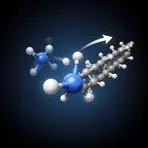
A chemical made when one hydrogen atom in ammonia is replaced by a short chain of carbon atoms
How Substituted
- Specialized

- Specialized
3
6.9
Surface Forms
Morphology
Etymology
Amine comes from ammonia, a simple chemical whose name goes back to the Egyptian god Ammon, plus the chemical ending -ine. So an amine is like 'ammonia' but with one or more hydrogens replaced by other groups, which is why amines are nitrogen-containing compounds.